

acne care
Acne and the Microbiome: Why Precision Is the Future of Acne Care

Most people know that bacteria play a role in acne. It's why benzoyl peroxide is on every pharmacy shelf, why dermatologists prescribe antibiotics, and why "antibacterial" has become a selling point for so many acne products. And to be fair, these treatments can work—for many people, they help reduce breakouts and keep acne under control.
But the experience of using them tells a more complicated story. Benzoyl peroxide leaves skin red, flaky, and tight, bleaches pillowcases and towels, and can make your face feel raw for weeks before it adjusts—if it ever fully does. Antibiotics require months of use, can disrupt the gut microbiome, and come with the growing problem of resistance that can make future treatment less effective.
Just as importantly, while both do reduce Cutibacterium acnes (C. acnes, or previously P. acnes), the bacteria at the center of acne, they can cause significant collateral damage. Antibiotics, benzoyl peroxide, and disinfectants like hypochlorous acid are broad-spectrum, meaning they kill beneficial bacteria alongside harmful ones, stripping the skin of the diverse microbial community that helps keep C. acnes in check. The goal is a healthier skin ecosystem, but the approach leaves the microbiome depleted rather than restored.
A healthy, diverse microbiome does more than just coexist with the skin—it actively trains the immune system to respond appropriately, competes against harmful bacteria to prevent overgrowth, and produces molecules that support the skin barrier. When broad-spectrum treatments strip that community away, these protective functions are diminished, leaving the skin more vulnerable, not less.
There's also a deeper reason why this collateral damage matters more than it might seem. C. acnes is not an invader. It lives on everyone's skin, including people who never develop acne. The problem isn't its presence—it's which strains of C. acnes dominate, and whether the skin's microbial ecosystem is balanced enough to keep the inflammatory ones in check.
When that balance tips—when pro-inflammatory strains take over and microbial diversity collapses—acne follows. Broad-spectrum treatments that eliminate all bacteria across the board can reduce C. acnes, but they also wipe out the beneficial bacteria that compete with and regulate C. acnes—leaving the microbiome less equipped to maintain balance once treatment stops. A more targeted approach, one that reduces C. acnes specifically while preserving the rest of the microbiome, gives your skin a better chance at genuine rebalancing. That's what precision microbiome science can do for acne care.
The Acne Microbiome and C. acnes
The skin microbiome is a diverse ecosystem
Skin health isn't just about what's on the surface—it's about what's living there. Your skin hosts a vast community of bacteria, fungi, and other microorganisms, collectively called the skin microbiome. These aren't contaminants to be scrubbed away; they're active participants in strengthening the skin barrier, regulating local immune activity, and holding potentially harmful organisms in check.
What makes this community function well is balance. When many different species and strains coexist, they compete with and regulate each other, maintaining a stable ecosystem. When that balance breaks down, the whole system can tip toward dysfunction. Researchers call this dysbiosis, and in acne-prone skin, this is a central part of the disease process.
However, the nature of this imbalance is more nuanced than simply having “too much” of one species of bacteria. In the past, it was thought that acne was caused simply by an overgrowth of C. acnes. However, careful genomic studies of the skin microbiome show that people with clear skin often have just as much C. acnes as those with acne. We now know the problem is not necessarily how much C. acnes there is on the skin, but instead, which subtypes (phylotypes) of C. acnes dominate that population—and what happens to the microbiome when the wrong ones take over.
“Skin health isn't just about what's on the surface—it's about what's living there. Your skin hosts a vast community of bacteria, fungi, and other microorganisms, collectively called the skin microbiome. ”
Why C. acnes becomes a problem
C. acnes is a normal, permanent resident of your skin. It lives primarily in hair follicles and pores, thriving in the sebum-rich, low-oxygen environment that follicles provide. In people with clear skin, C. acnes is present in significant quantities—it's one of the most abundant bacteria on the face—yet causes no problems. It's only when the environment in the follicle shifts, and when the balance within the C. acnes population itself changes, that acne develops.
Several conditions converge to set the stage for this. Too much sebum production—driven by hormones, genetics, and other factors—creates a nutrient environment that fuels bacterial growth. Clogged pores, caused by a buildup of dead skin cells and sebum, trap bacteria inside follicles and reduce oxygen levels further. That environment is particularly favorable to C. acnes, which thrives under low-oxygen conditions.
These conditions don't just allow C. acnes to proliferate—they selectively favor more inflammatory subtypes of C. acnes. And that is what sets acne-prone skin apart.
Not all C. acnes are equal
C. acnes isn't a single organism. It's a species made up of multiple genetically distinct subtypes that differ meaningfully in how inflammatory they are and how aggressively they behave in the follicle.
In people with clear skin, these subtypes coexist in a relatively balanced distribution. The strains more commonly found in healthy skin tend to be less inflammatory, and their presence appears to play a stabilizing role in the follicle.
In acne-prone skin, the balance shifts. One subtype in particular—known as IA1—becomes dominant, making up 84–95% of the C. acnes population on acne-prone skin vs. only 39% on non-acneic skin. IA1 strains are more pro-inflammatory than other subtypes: they produce more lipases (enzymes that break down sebum into irritating fatty acids), generate more inflammatory metabolites, and are more likely to form biofilms that resist clearance. At the same time, the less inflammatory subtypes that help maintain microbial stability decline.
Why Current Treatments Fall Short
Understanding acne as an ecological imbalance helps reframe the limitations of existing treatments in an important way. Most current acne therapies are built on the assumption that all bacteria are the enemy and that killing or suppressing them broadly is the solution. They can reduce C. acnes, but at a significant cost to the broader microbial community the skin depends on—and they often require accepting significant side effects.
Benzoyl peroxide
Benzoyl peroxide is one of the most widely used acne treatments, and data show that it does reduce C. acnes populations. But it does so indiscriminately—killing beneficial bacteria alongside C. acnes, disrupting the broader microbiome that healthy skin depends on, and leaving the microbiome less resilient once treatment stops. It also carries a significant side effect burden: dryness, peeling, redness, photosensitivity, and irritation are common, particularly at higher concentrations. Benzoyl peroxide can also bleach clothes, fabrics, and hair. For many users, the irritation limits how consistently they can use it.
Topical and oral antibiotics
Antibiotics—both topical (clindamycin, erythromycin) and oral (doxycycline, minocycline)—suppress C. acnes growth and have been a mainstay of acne treatment for decades. But like benzoyl peroxide, they act broadly across bacterial species, eliminating beneficial bacteria alongside C. acnes and depleting the microbiome diversity that helps keep acne-prone strains in check.
Antibiotics can have a range of side effects including photosensitivity and skin irritation, and extended antibiotic use is also associated with the development of antibiotic-resistant C. acnes strains—a growing clinical problem with broader public health implications. Additionally, heavy use of antibiotics exacerbates antibiotic resistance. 50–90% of C. acnes strains across different countries now show resistance to antibiotics. Oral antibiotics additionally affect the gut microbiome, which can have systemic consequences. For these reasons, dermatological guidelines increasingly caution against long-term antibiotic use for acne.
Retinoids
Retinoids work through a different mechanism than antibacterials—they don't target bacteria at all. Instead, they are designed to reduce pore-clogging. By normalizing skin cell turnover, retinoids reduce the pore-clogging that creates the low-oxygen, sebum-saturated conditions where pro-inflammatory C. acnes thrives.
Topical retinoids (tretinoin, adapalene) are helpful for many patients, though they can cause skin irritation and sensitivity, particularly during initial use. Oral isotretinoin (i.e. Accutane) is reserved for more severe cases, can have very significant side effects including extreme dryness, aches and pains, and serious risk of birth defects. Its usage requires close medical supervision.
The core limitation
What unites benzoyl peroxide and antibiotics is that both reduce C. acnes by eliminating bacteria broadly—disrupting the microbiome in the process and removing the beneficial species that naturally help keep C. acnes populations in balance. Retinoids take a different approach, targeting the pores rather than the bacteria themselves, but leave the microbial population unaddressed. In each case, when treatment stops, the microbiome is often less equipped to maintain balance than before, and the skin has suffered through harsh side effects.
A Precision Approach: Hypothesis™ and CUT-02™
We founded hypothesis™ because we believed we had a better solution: precision targeting of the acne microbiome with our patented CUT-02™ enzyme technology.
CUT-02™ is based on a class of naturally-occurring enzymes called lysins (or endolysins). Lysins work by recognizing and degrading the cell walls of specific target bacteria. Developed in the laboratory at hypothesis™ over 2 years, CUT-02™ is the first lysin to effectively target C. acnes while preserving the beneficial bacteria on the skin. In laboratory testing, CUT-02™ eliminated 99.9% of C. acnes within one hour with no measurable effect on non-target bacteria.
By selectively reducing C. acnes without collateral disruption of the microbial community around it, CUT-02™ helps address the bacterial driver of acne while returning the skin microbiome to long-term balance.
“We founded hypothesis™ because we believed we had a better solution: precision targeting of the acne microbiome with our patented CUT-02™ enzyme technology. ”
How CUT-02™ compares to existing approaches
The case for CUT-02™ rests on two genuine advantages over conventional treatments: species-level precision and significantly greater gentleness.
Precision: Species-level precision matters because the microbiome is not just a target—it's a resource. Beneficial skin bacteria compete with C. acnes, produce antimicrobial molecules that keep pathogenic bacteria in check, and help maintain the microbial diversity associated with healthy skin. Broad-spectrum treatments eliminate these good bacteria, leaving the microbiome less equipped to maintain balance. CUT-02™ reduces C. acnes while leaving those beneficial species intact, supporting the conditions the skin needs to stay in balance rather than undermining them.
Gentleness: CUT-02™ is also very gentle on the skin because it only binds to and interacts with its target bacteria (C. acnes). It does not have any effect on your skin cells or your skin barrier. In our clinical trial, 95% of participants said our Acne Precision Serum with CUT-02™ was non-irritating even after 8 weeks of daily use.
Gentleness matters because side effects are a real obstacle to consistent, long-term use. Benzoyl peroxide is associated with dryness, peeling, and redness that make daily adherence difficult. Antibiotics, used over time, drive resistance and affect the gut as well as the skin. As a precision enzyme formulated for daily use, CUT-02™ is designed to avoid the irritation and systemic concerns that cause so many people to cycle on and off conventional acne regimens.
For patients using retinoids, CUT-02™ may be a complementary addition to your routine—targeting the bacterial side of the equation while retinoids address the follicular environment that enables C. acnes overgrowth.
 with CUT-02™ with CUT-02™ |
Benzoyl Peroxide | Antibiotics | Accutane | |
|---|---|---|---|---|
| Specifically targets acne bacteria |  |
 |
|
|
| Supports the microbiome | |
|
|
|
| Low risk of skin irritation | |
Dryness, peeling, redness | Irritation + rashes | Severe dryness |
| No other side effects | |
Possible benzene exposure |
Antibiotic resistance |
Significant potential side effects |
| Safe for long-term use | |
Limited by irritation | |
|
The Hypothesis™ Acne Line
Hypothesis™ has built a precision acne routine around CUT-02™, designed to address the microbiome imbalance at the root of acne—specifically and gently.
The Hypothesis™ Daily Acne Cleanser uses 1.0% salicylic acid to gently cleanse and exfoliate pores, clearing the buildup that creates the low-oxygen environment where pro-inflammatory C. acnes thrives and preparing the skin for CUT-02™ to reach the pores more effectively.
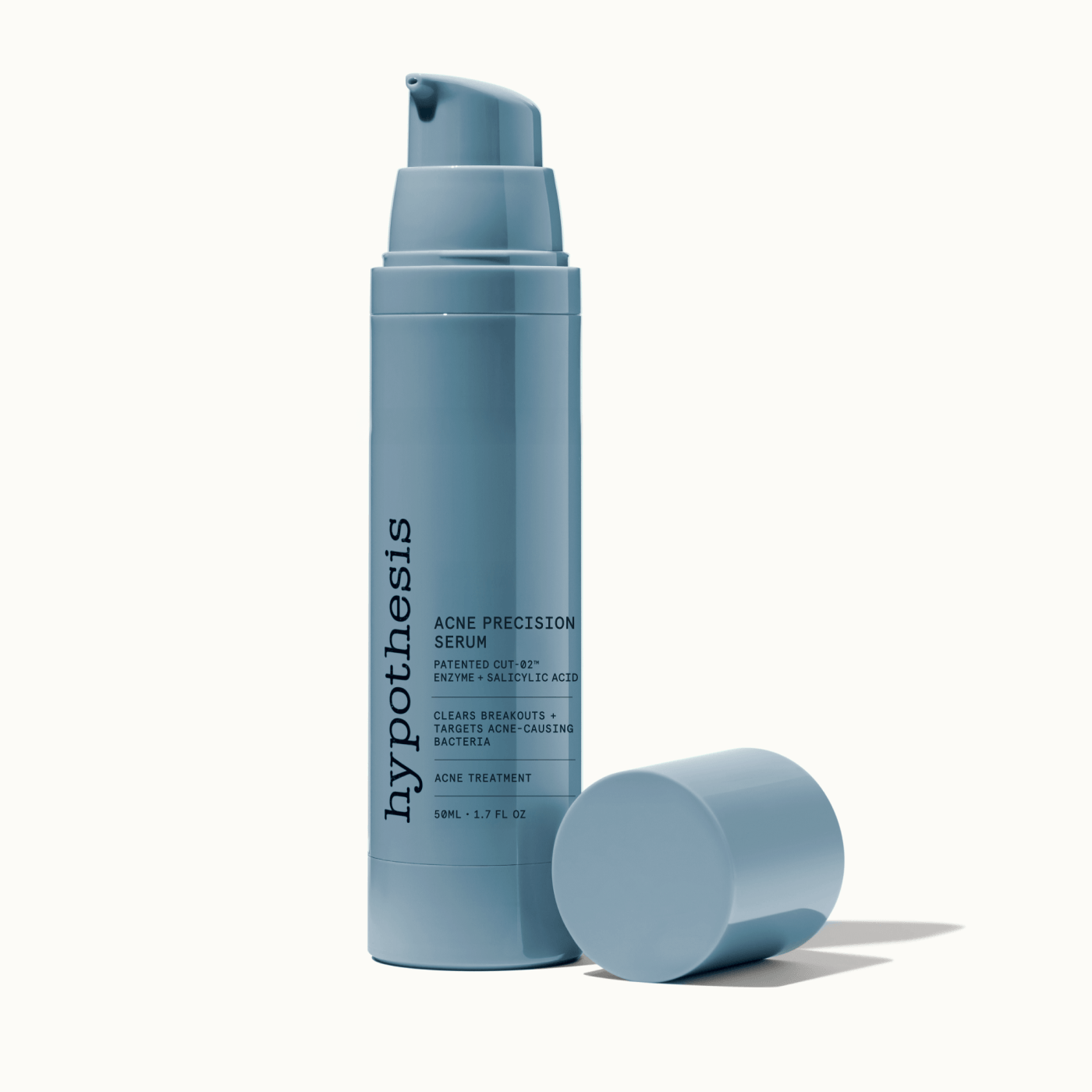
The Hypothesis™ Acne Precision Serum delivers CUT-02™ directly to the skin for once- or twice-daily use, targeting the underlying C. acnes imbalance as both a treatment for active acne and a preventive measure against new breakouts.
The Hypothesis™ Precision Microdart Blemish Patch is an on-demand spot treatment to stop under-the-surface and emerging pimples from fully developing. Unlike standard hydrocolloid patches that sit passively on the skin’s surface, this patch uses microdarts to actively deliver CUT-02™ into the pore, reaching the bacteria beneath the skin before a pimple fully forms. This makes it particularly suited to early-stage pimples that topical treatments can’t reach.
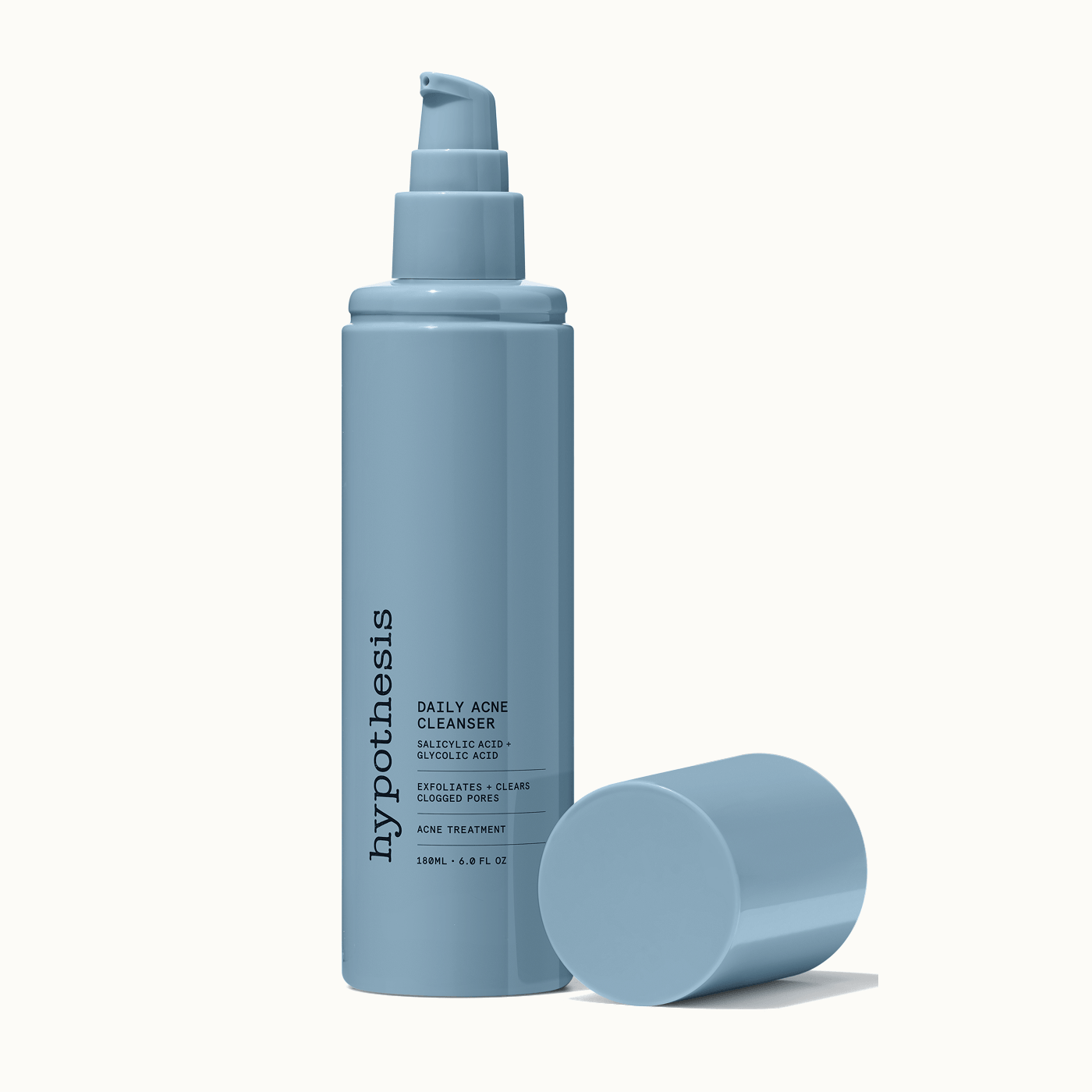
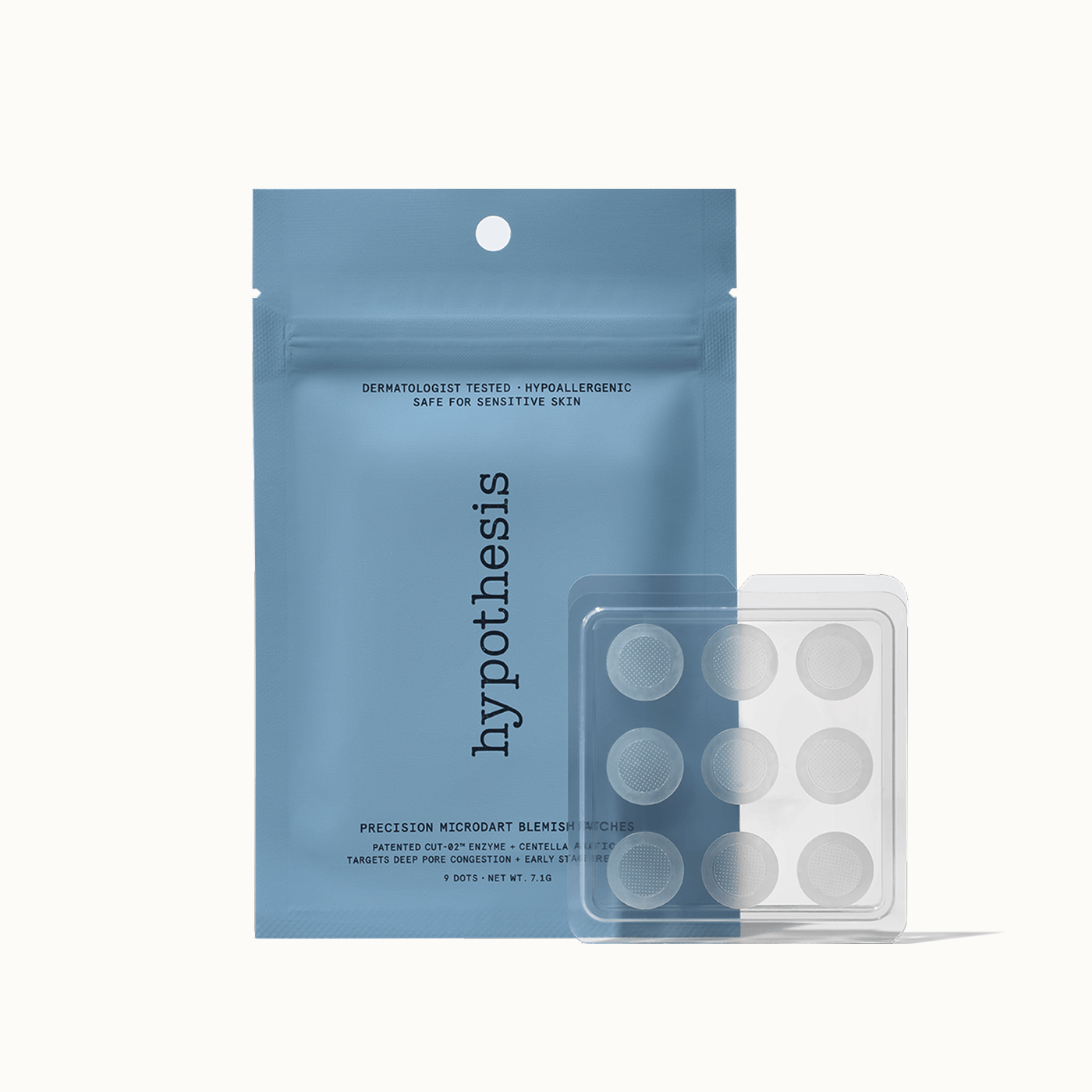
Clinical Results
We ran an 8-week clinical trial of the Hypothesis™ Daily Acne Cleanser and Acne Precision Serum routine and the results were compelling:
- 94% of participants saw clinical improvement within 2 weeks of starting the Hypothesis routine, with best results seen after 8 weeks of consistent use.
- Acne intensity—measured using a clinical scoring method (GAGS)—was reduced by 44%.
- 89% of participants reported less redness.
- 84% of participants reported fewer comedones (bumps, blackheads, and whiteheads).
- 84% of participants reported less skin tenderness.
- 95% of participants said the routine was non-irritating even after 8 weeks of daily use.
These results are comparable in both magnitude and time to improvement to those reported in clinical studies of common first-line treatments like antibiotic/benzoyl peroxide combination therapies—but without the harsh side effects and collateral damage to the skin microbiome.
We also ran a clinical trial of 32 individuals with under-the-surface pimples, using a one-time application of the Hypothesis™ Precision Microdart Blemish Patch (6–8 hours):
- 94% of participants said the patch reduced progression of the pimple.
- 97% of participants said the patch helped flatten the pimple.
- 88% of participants said the patch stopped the progression of the pimple.
- 84% of participants said the patch worked faster than their usual spot treatment.
The Bottom Line
The standard narrative around acne—bacteria causes acne, kill the bacteria—is only partially right, and the gaps in that logic explain a lot of the frustration people experience with conventional treatments.
Broad-spectrum treatments that eliminate bacteria indiscriminately can reduce C. acnes — but they also deplete the beneficial species that help maintain microbial balance, leaving the microbiome less resilient when treatment stops. Harsh side effects associated with these treatments, like irritation, redness, and dryness can compound the damage to the skin.
What the science increasingly points toward is a more targeted approach: reducing C. acnes specifically, at the species level, while preserving the rest of the microbial community. That gives the skin a better foundation for lasting balance rather than just temporary suppression.
CUT-02™ is designed around that principle. As a precision endolysin that specifically targets C. acnes, it offers a more selective and gentler path than benzoyl peroxide or antibiotics—one that reduces the primary bacterial driver of acne without dismantling the microbiome the skin needs to stay healthy. For people who have found conventional acne care to be harsh, disruptive, or temporary, that difference is meaningful.
That's the science behind hypothesis™, and it's what we built our acne line to deliver.
This content is for informational and educational purposes and does not constitute medical advice. Please consult a licensed dermatologist for personalized care.
Frequently Asked Questions
What causes acne?
Acne develops when hair follicles become clogged with sebum and dead skin cells, creating conditions that favor the growth of pro-inflammatory strains of Cutibacterium acnes (C. acnes). These bacteria trigger an immune response that produces the redness, swelling, and lesions associated with acne. Hormones, genetics, and environmental factors influence sebum production and pore-clogging, which is why acne severity varies widely between individuals and tends to peak during puberty.
Is acne caused by bacteria?
Acne is not caused by bacteria in the way an infection is. C. acnes is a normal resident of healthy skin — present in everyone. The problem isn't having C. acnes; it's an imbalance in which subtypes of C. acnes dominate. In acne-prone skin, pro-inflammatory phylotypes (particularly IA1) overgrow while more protective strains decline. This ecological imbalance, not a bacterial invasion, is what drives acne development and progression.
Why aren't antibiotics a good long-term solution for acne?
Antibiotics reduce C. acnes levels but do so non-selectively, killing beneficial bacteria alongside problematic ones and further disrupting the skin microbiome. Antibiotic resistance is also an issue. With extended use, antibiotic-resistant C. acnes strains can develop, reducing treatment effectiveness over time. Oral antibiotics also affect the gut microbiome, with potential systemic consequences. For these reasons, dermatological guidelines recommend limiting antibiotic use for acne to short courses and avoiding long-term reliance on them.
What is the difference between benzoyl peroxide and a precision enzyme like CUT-02™?
Benzoyl peroxide is a chemical that kills bacteria through a powerful oxidizing reaction—it's non-selective, eliminating beneficial bacteria along with C. acnes and often causing dryness, irritation, and peeling in the process. CUT-02™ is a precision endolysin enzyme engineered to specifically target C. acnes while leaving the broader skin microbiome intact. Because it is selective rather than broad-spectrum, it works with the skin's microbial ecosystem rather than disrupting it, and is gentle enough for daily use without the side effects associated with benzoyl peroxide.
What is a lysin?
A lysin or endolysin is a type of enzyme—originally found in bacteria and bacteriophages—that works by binding to and breaking down the cell walls of their target bacteria. Because endolysins can be engineered to target particular bacterial species, they are well suited for precision applications like acne care, where the goal is to reduce a specific pathogenic population without harming beneficial microorganisms. CUT-02™ is the first lysin to effectively target C. acnes.
How is the Hypothesis Precision Microdart Patch different from a regular pimple patch?
Standard hydrocolloid patches are passive—they sit on the skin surface and absorb fluid from a visible, already-formed pimple. The Hypothesis Precision Microdart Blemish Patch uses microdarts to actively deliver CUT-02™ through the skin’s surface and into the pore, reaching C. acnes beneath the skin before a pimple fully develops. This makes it particularly effective for subsurface, under-the-skin pimples that surface treatments cannot effectively reach. Applied for six to eight hours, it works to stop and reduce the progression of an emerging pimple rather than just managing one that has already formed.