

eczema care
Dressing for Winter Eczema: My Layering Strategy to Sidestep Flares
Jada Jones is an eczema advocate and content creator best known for openly sharing her topical steroid withdrawal (TSW) healing journey on TikTok, which garnered hundreds of millions of views. She continues to share her eczema journey online post-TSW.
After spending the past year in warmer climates to support her healing and avoid winter conditions, Jada is experiencing her first cold season in North Carolina: She spoke with us about how she’s preparing for winter eczema flares and why she had to completely rethink her approach to layering—both skincare and clothing—to keep her skin calm, hydrated, and protected when transitioning between cold outdoor temperatures and heated indoor spaces.
How Winter Affects My Eczema
If you have eczema, you already know winter is tough. But understanding why actually helps you prepare better.
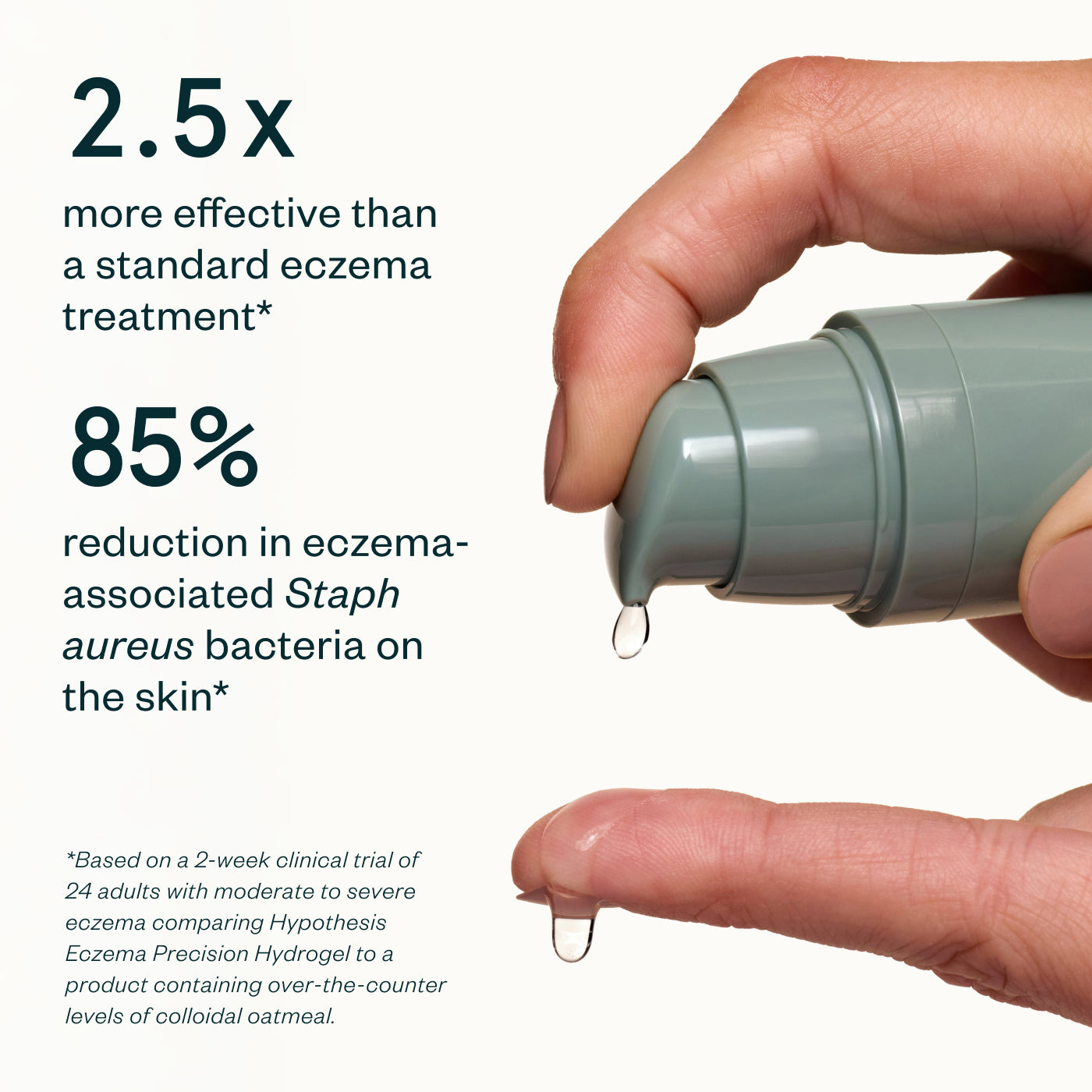
When temperatures drop, a few things happen at once. The cold, dry air outside strips moisture from your skin, while heated indoor spaces dry out your skin even more. Big temperature swings (like going inside after being out in the cold) can also trigger flares. Your skin barrier—already weakened if you have eczema—loses hydration fast. And here's the part I didn't know until recently: that barrier disruption creates the perfect environment for harmful Staph aureus bacteria to take over. When that bacteria dominates your skin's microbiome, it releases toxins that trigger more inflammation. It's a cycle.
Then you add in all the friction from fabrics rubbing against already-irritated skin, and it makes sense why so many of us see our eczema get worse this time of year.
That's why my approach focuses on two things: prepping my skin before I get dressed, and being really strategic about what touches my skin. (You can read more about the science behind winter flares and the microbiome connection here.)
Layering Starts with Skincare
For me, skincare is the most important layer before getting dressed—especially in the winter. If you have winter eczema flares, you don’t really get the luxury of throwing on clothes and hoping for the best. Barrier support is everything. It’s not just about moisturizing; it’s about keeping your skin calm, protected, and intact so it can actually tolerate winter layers without flaring.
Gentle cleansing
It starts in the shower. I’m very intentional about cleansing because stripping my skin in the winter is a recipe for disaster. I stick to super simple body cleansers—usually a pure oatmeal bar soap or right now a gentle glycerin cleanser—nothing fragranced. The goal is to cleanse without disrupting my skin barrier any more than it already is.
Reduce Staph aureus
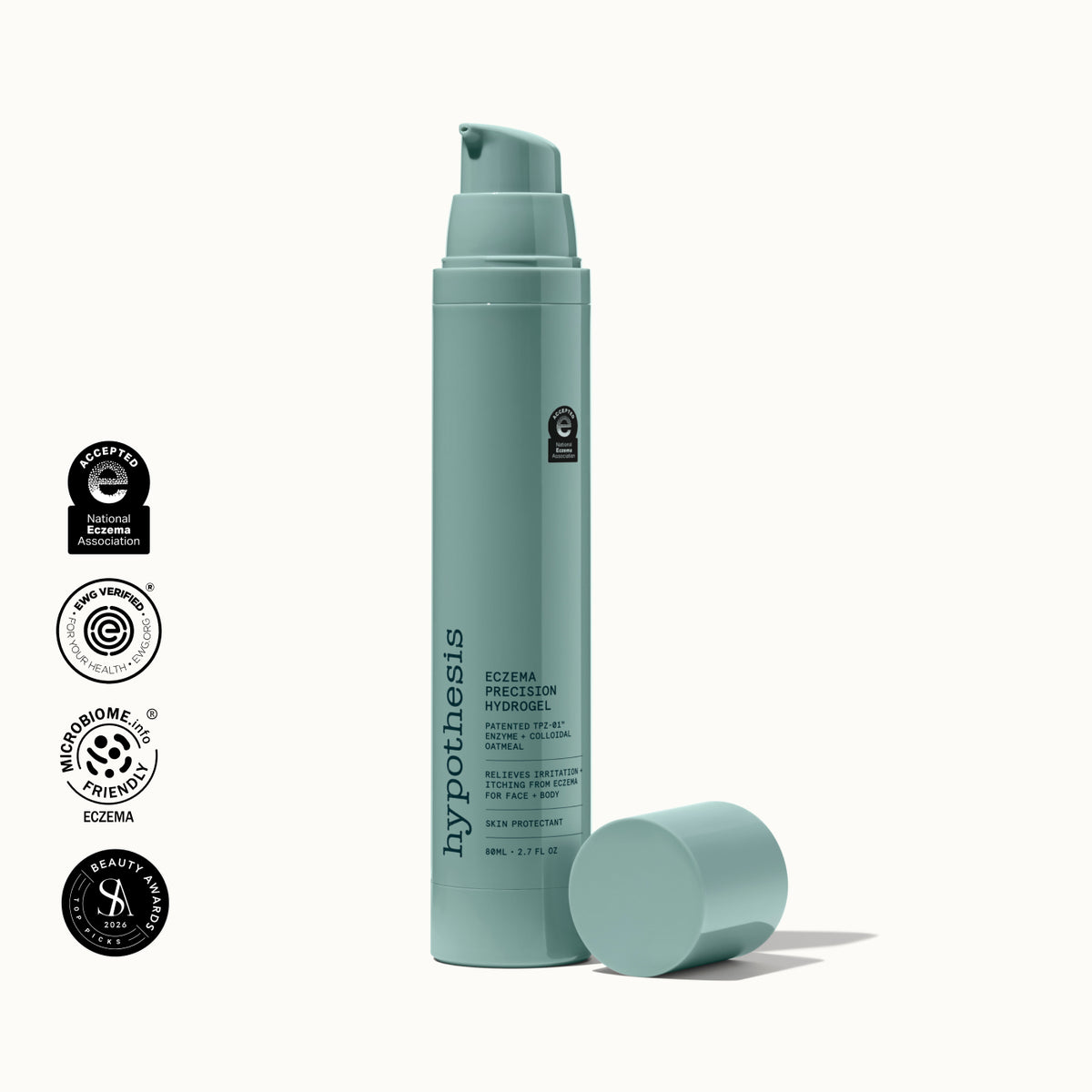
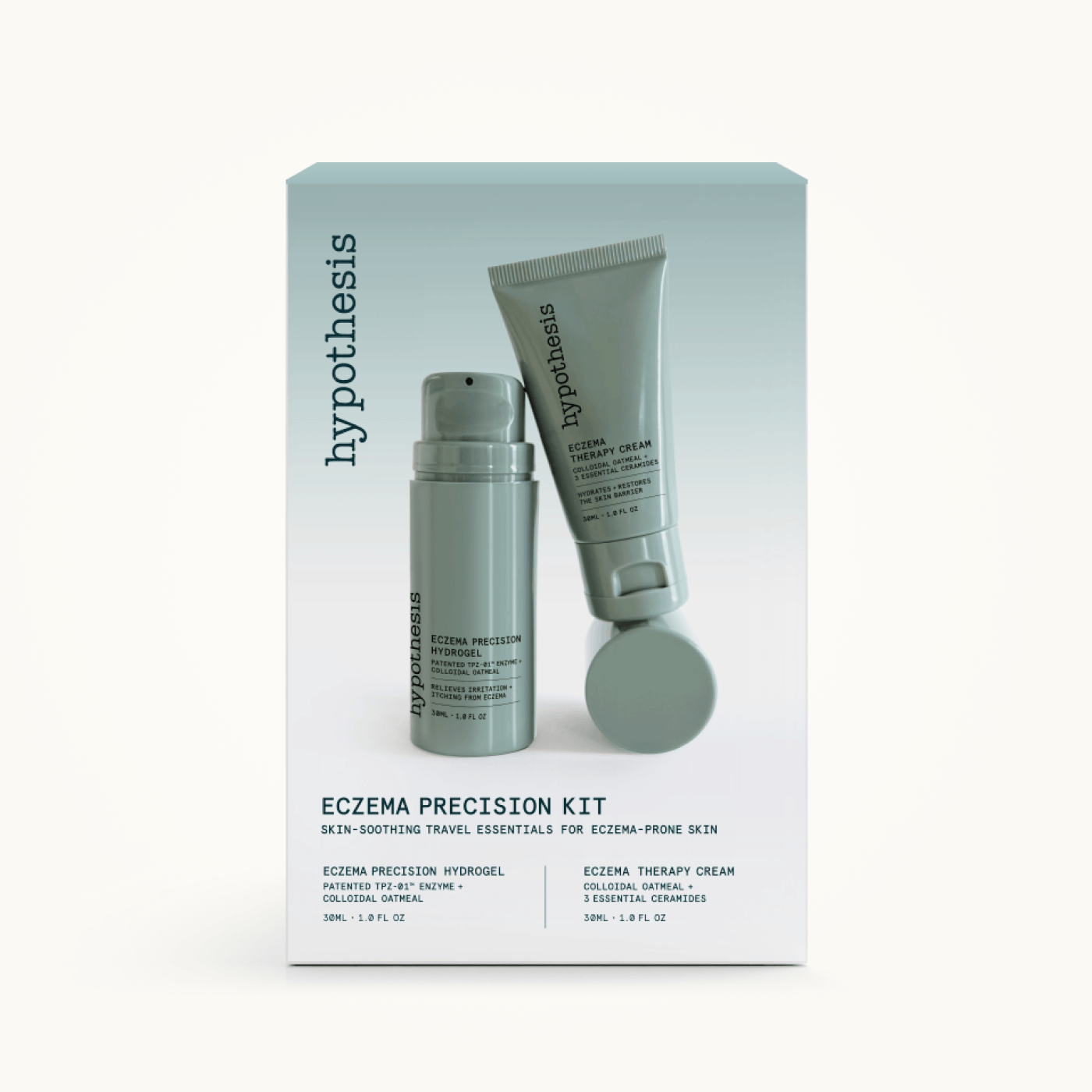
As soon as I step out of the shower, I go straight into soothing mode. Timing matters for me—I don’t let my skin dry out completely before applying products. I’ve been using hypothesis™ since I joined their early access program, and it’s been a staple in my routine ever since. I apply the Eczema Precision Hydrogel to the areas where I’m most prone to irritation — my neck, arms, and legs. Supporting my skin’s microbiome has been huge for me, and learning about how the TPZ-01™ enzyme works to target and kill Staph aureus bacteria really changed how I think about treating eczema at the source instead of just chasing symptoms.
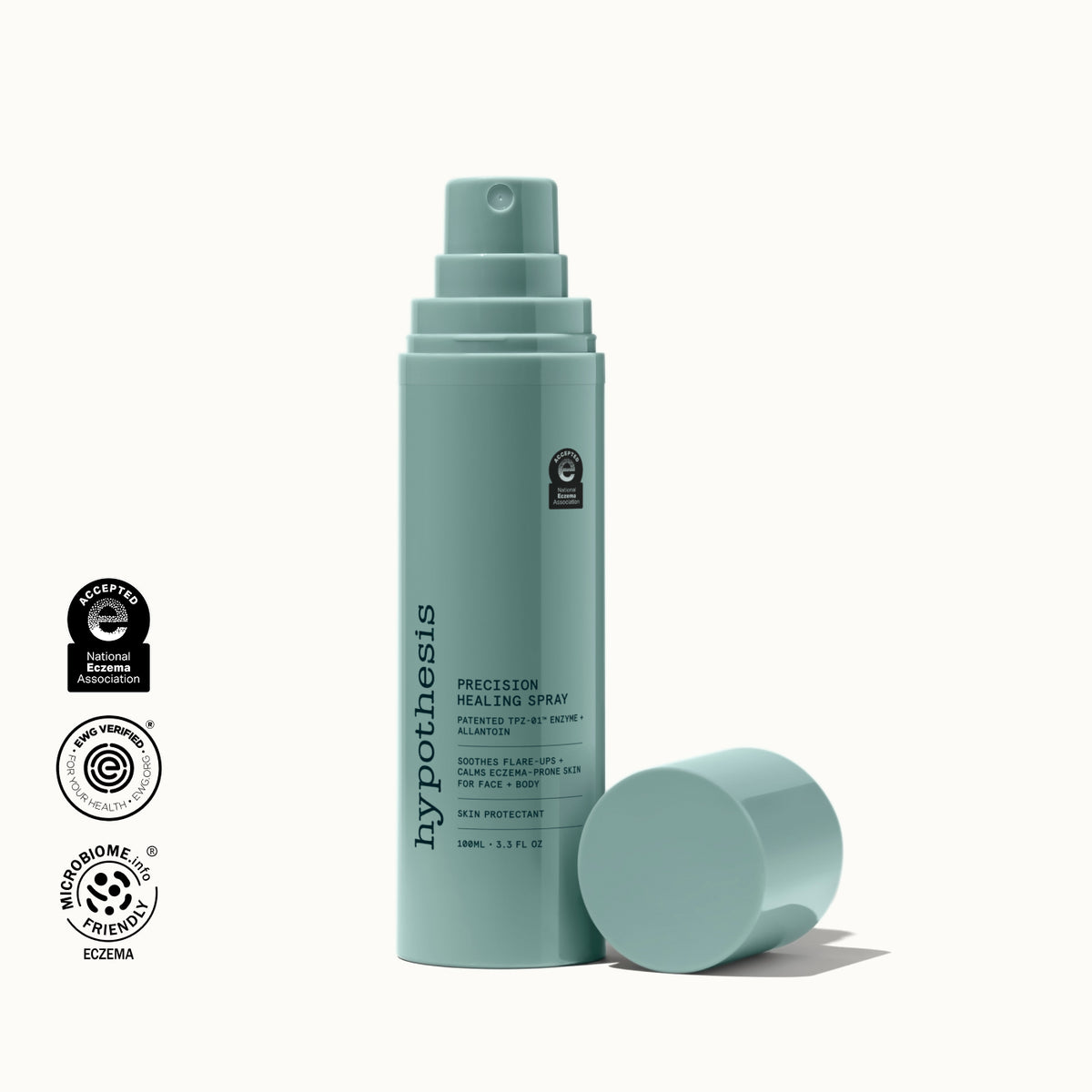
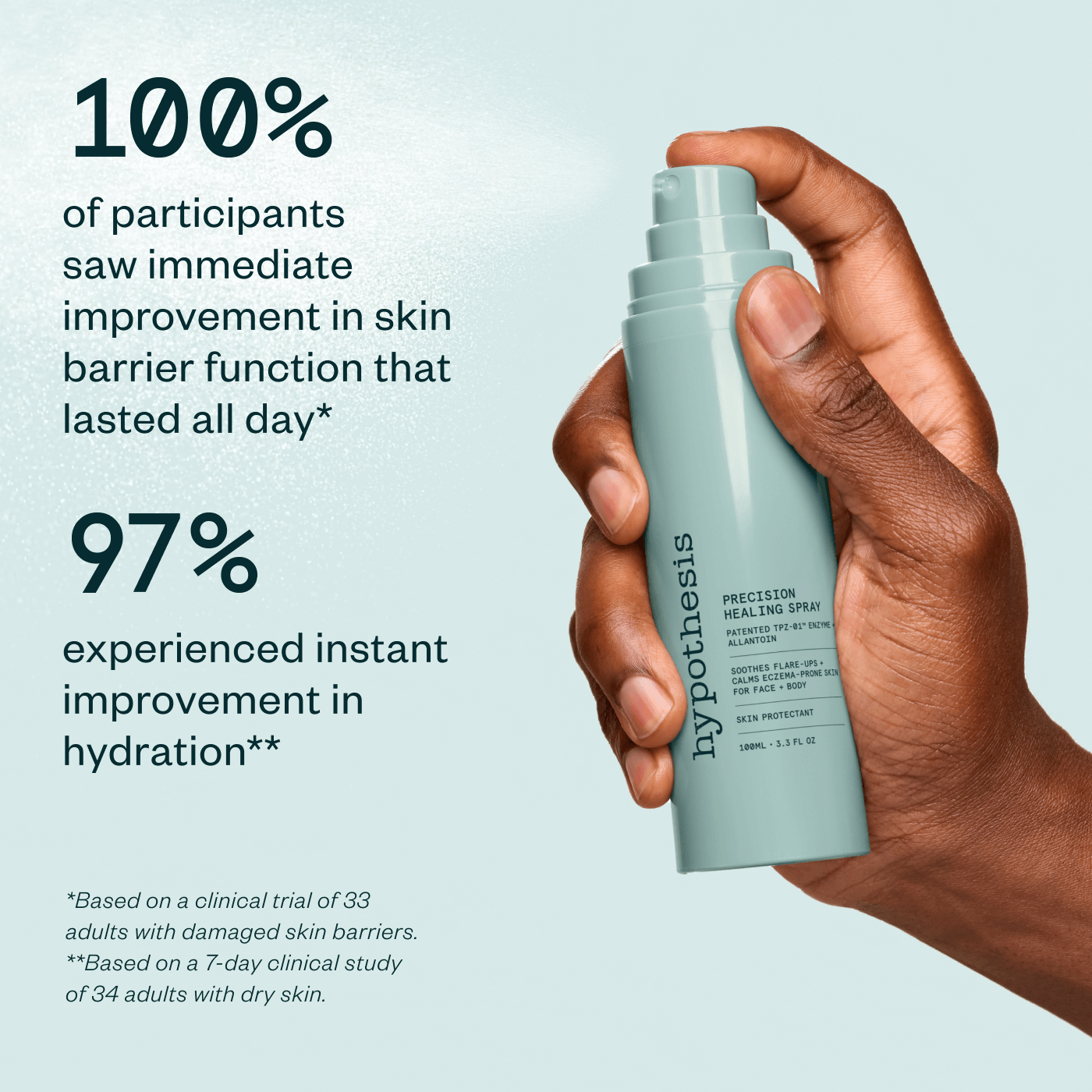
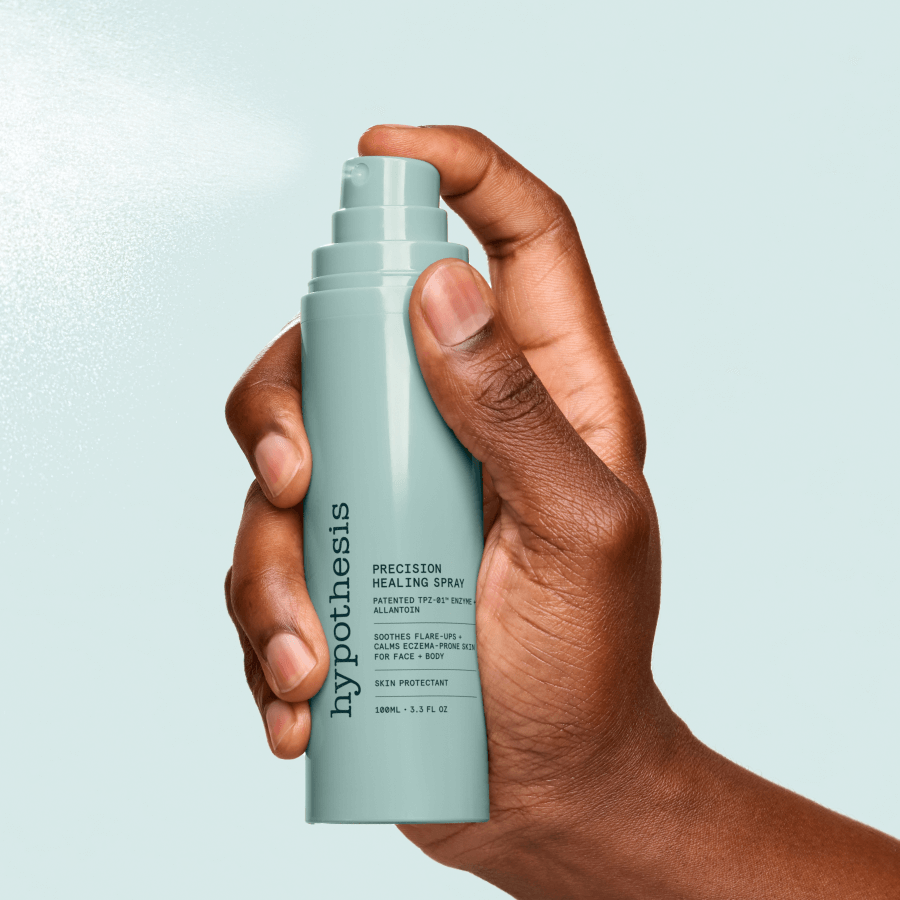
I’ll usually follow that with the Precision Healing Spray, especially as a layer on my face and back, right after cleansing. I like using it early in my routine as a kind of quick all-over skin reset, because the TPZ-01™ enzyme helps address the Staph aureus bacteria before I start layering anything else.
Hydrate and repair the skin barrier
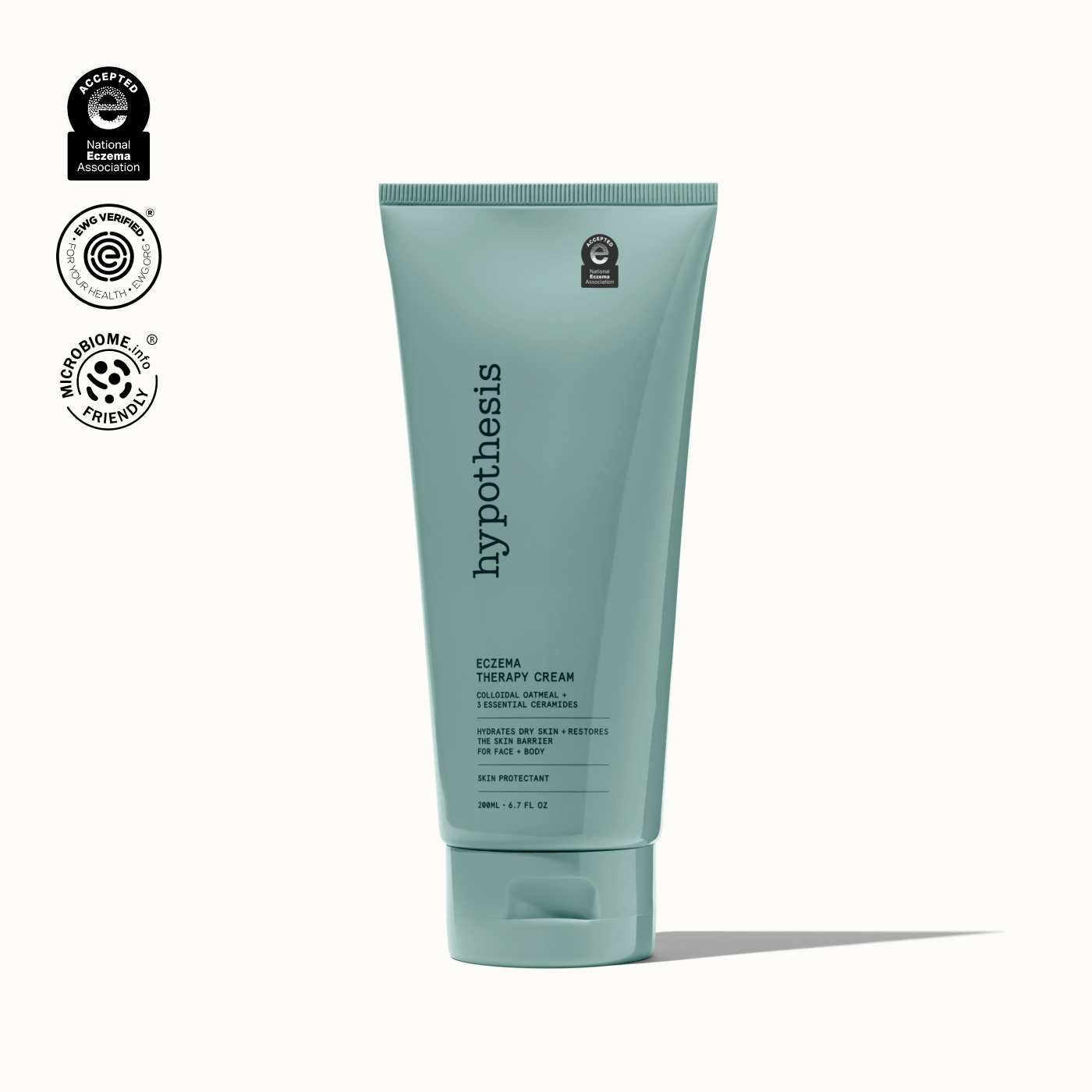
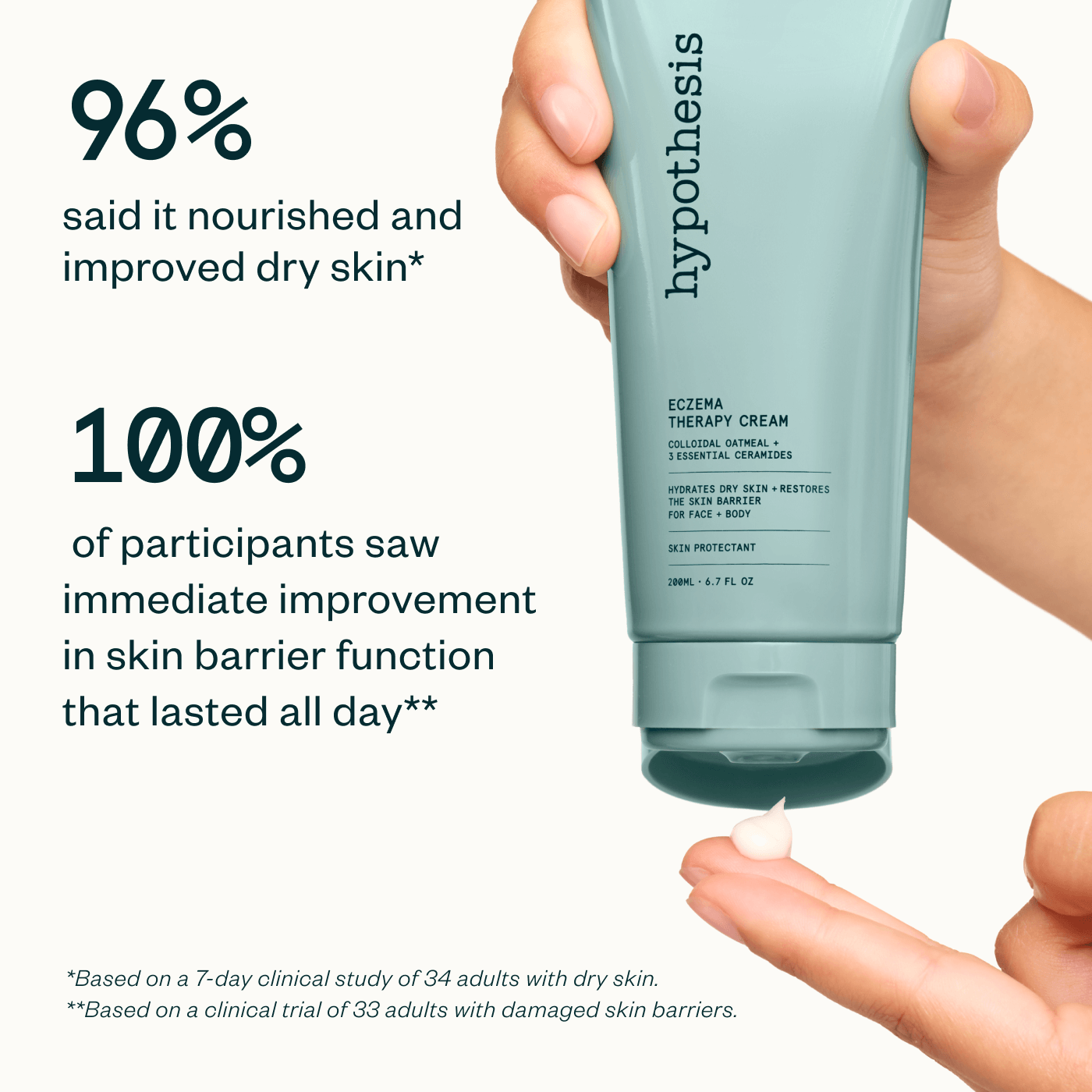
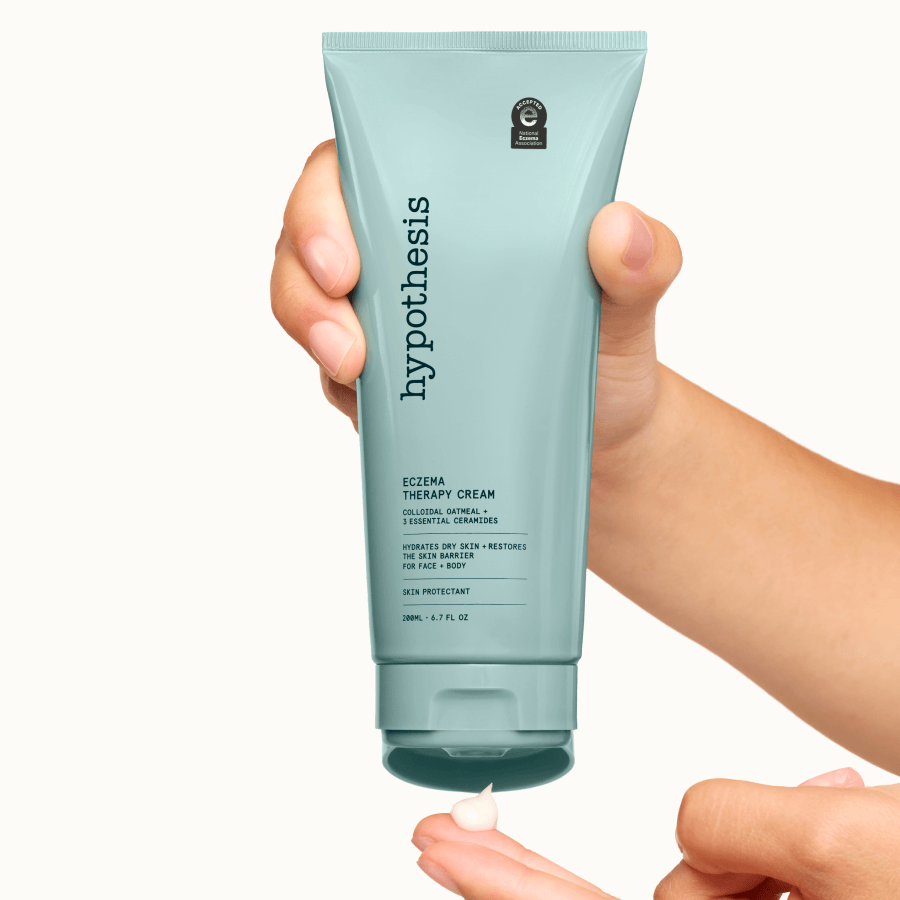
Once that settles in, I go in with the Eczema Therapy Cream. I love that it’s lightweight but still deeply hydrating. I’ve learned the hard way that starting with something too thick can actually stop moisture from absorbing properly, so this is the perfect base layer for me. On extra-dry or wind-exposed areas, I’ll sometimes add a thicker cream or ointment on top for extra protection, but the hypothesis™ cream is always my starting point.
When my skin feels good, getting dressed feels much easier…and in the winter, that makes all the difference.

My Eczema-Friendly Fabric Layering Method
Now that I’ve healed from TSW, I’m more flexible with what I get to wear especially now that I’m not in the same head to toe sweats outfit all day. But when I’m flaring, sensitive, or just want an eczema-secure way to get dressed in winter, this is the method I fall back on.
It’s not about only breathable fabrics—it’s about barriers
For me, eczema isn’t triggered by one single fabric—it’s triggered by friction, temperature swings, and irritation directly on my skin. The key is creating a comfortable barrier between my skin and the outside world.
That’s why I always start with skincare, then build my outfits in a way that protects my skin from wind, cold, and rough textures—even if that means using some synthetic fabrics strategically.
Layer 1: The Best Base Layers for Eczema (Skin-First, Always)
This is the layer that touches my skin directly, so it has to feel good… no exceptions.
What I actually wear
For base layers under pants, I swear by thermal leggings, which we know are typically polyester. Normally, synthetics can be tricky for eczema, but these work for me because they’re smooth, lightweight, and act as a shield between my skin and cold air or rough outer fabrics. They also help prevent wind from hitting my skin directly, which is a huge trigger for me in winter.
I treat these as a protective barrier, not a standalone pant. I always layer my actual outfit on top.
For tops, I usually start with a long-sleeve shirt or tank in eczema-friendly fabrics like soft cotton or bamboo. This keeps my skin from touching sweaters, jackets, or anything with texture. When my neck or chest is flaring, I’m extra mindful of seams, tags, and tight necklines.
Fabrics to avoid with eczema:
- Wool
- Tight elastic
- Scratchy or stiff fabrics
I’m less strict about fabric composition and more focused on how it feels and behaves on my skin.
Layer 2: Mid-Layer (warmth without friction)
This layer is where I add warmth, but I keep it loose and comfortable.
I gravitate toward:
- Sweatshirts
- Soft knits
- Lightweight sweaters (always over a base layer)
If something feels tight or makes me overheat, I skip it. Overheating is one of the fastest ways my skin flares.
Layer 3: Outer Layer (blocking the elements)
My outer layer’s job is simple: block cold air and wind.
I look for coats with:
- Smooth linings
- Minimal exposed seams
- Zippers that don’t rub my neck or wrists
If a coat is rough inside, I make sure my base and mid-layers create enough separation that nothing irritating touches my skin.
The Last Layer: Accessories That Actually Work
Winter gloves for eczema
My hands are my most sensitive areas and flare the most in winter, so gloves really matter. I avoid wool and anything that makes my hands sweat. I prefer:
- Soft leather gloves with smooth interiors
- Cotton-lined gloves
On extra cold days, I’ll layer thin cotton gloves underneath for added protection.
Scarves, hats, socks
- Scarves: cotton or silk over wool
- Hats: lined beanies (cotton or satin lining)
- Socks: soft cotton, nothing tight around the ankle
At the end of the day, my approach isn’t about following rigid rules, it’s about knowing what works for my skin. Targeted skincare, strategic layers, good barriers, and comfort first. When my skin feels protected, getting dressed stops being stressful—even in the winter!