

eczema care
Eczema and Sun Exposure: How to Protect Your Skin for Spring and Summer
Warmer weather brings more opportunities to be outdoors—but it also brings increased exposure to sun, heat, and sweat, which can aggravate sensitive, eczema-prone skin. “Sun exposure can be tough for people with eczema,” says Dr. Peter Lio, MD, board-certified dermatologist and hypothesis™ advisory board member. “Ultraviolet light can weaken the skin barrier, while heat and sweat can further drive irritation, dryness, and inflammation.” The challenge is finding ways to enjoy being outside while minimizing the triggers that lead to irritation and flares.
“Sun exposure can be tough for people with eczema. Ultraviolet light can weaken the skin barrier, while heat and sweat can further drive irritation, dryness, and inflammation.”
The good news is that with the right approach—starting with the skin barrier—you can stay consistent with sun protection while reducing irritation and keeping eczema-prone skin more stable.
Why Sun, Heat, and Sweat Affect Eczema
Eczema-prone skin has a weakened skin barrier, meaning it loses moisture more easily and reacts more quickly to external stress.
During the warmer months, several triggers often overlap:
- Sun exposure can weaken the barrier and dry out skin
- Heat can contribute to skin irritation and inflammation
- Sweat can irritate sensitive skin
- Friction from clothing or movement can trigger symptoms
Even if each factor is mild on its own, together they can increase the likelihood of dryness, irritation, and flare-ups.
Why UV Can Be Confusing for Eczema
This creates a contradiction that confuses many people: if UV exposure damages the skin barrier, why does phototherapy sometimes help eczema symptoms?
The answer lies in controlled dosage. Dermatologist-monitored phototherapy in clinical settings uses specific UV wavelengths in carefully measured amounts, targeting anti-inflammatory effects while minimizing damage. Everyday sun exposure is much less predictable, often resulting in more barrier damage than benefits.
How Barrier Support and Sunscreen Work Together
Sunscreen is an essential part of summer skincare. But for people with eczema, supporting the skin barrier first can help improve comfort, reduce stinging, and make sun protection easier to use consistently. When your skin barrier is strong, it’s better able to tolerate both sun exposure and the products used to protect against it.
Focus on:
- Gentle cleansing
- Consistent moisturizing
- Using products designed for eczema-prone skin
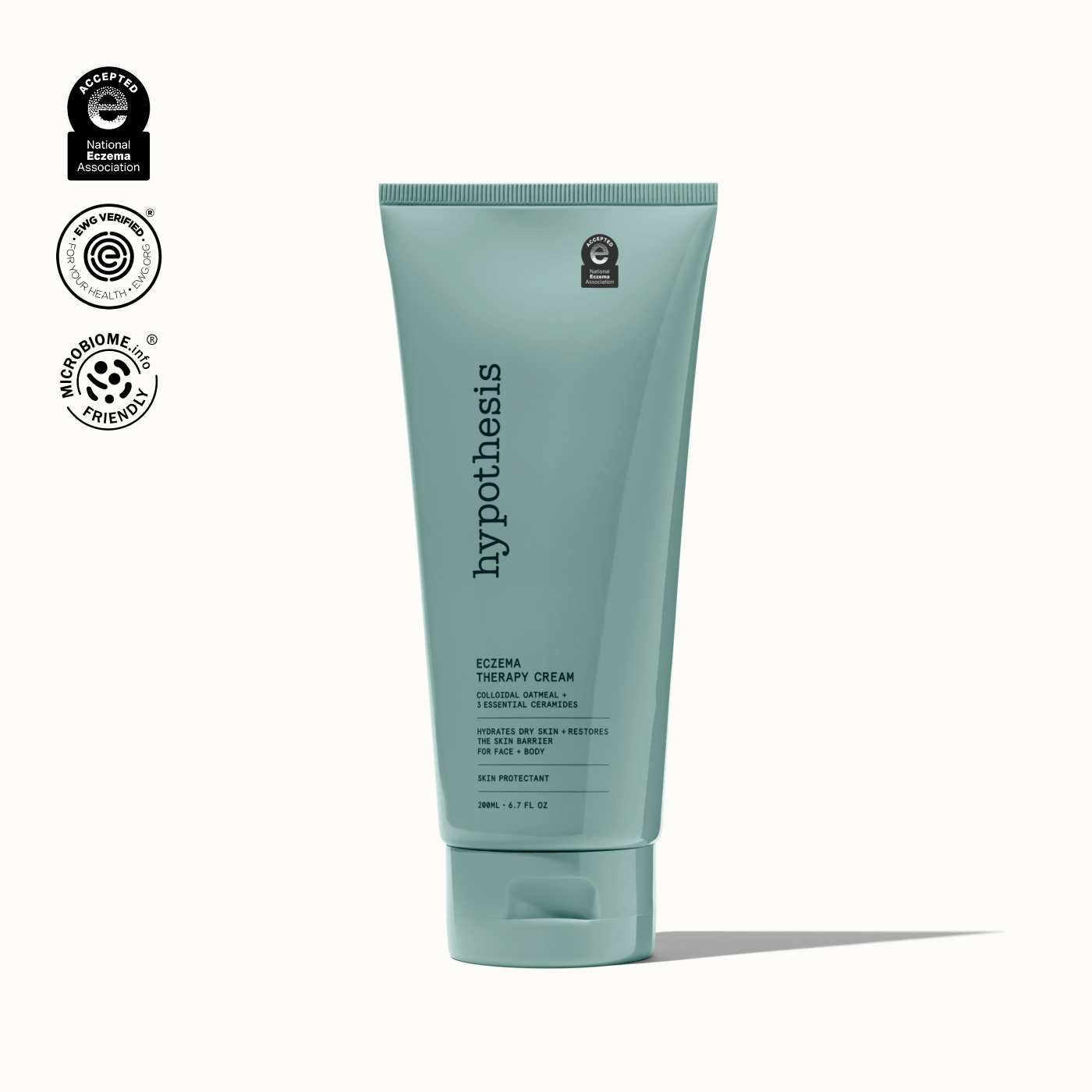
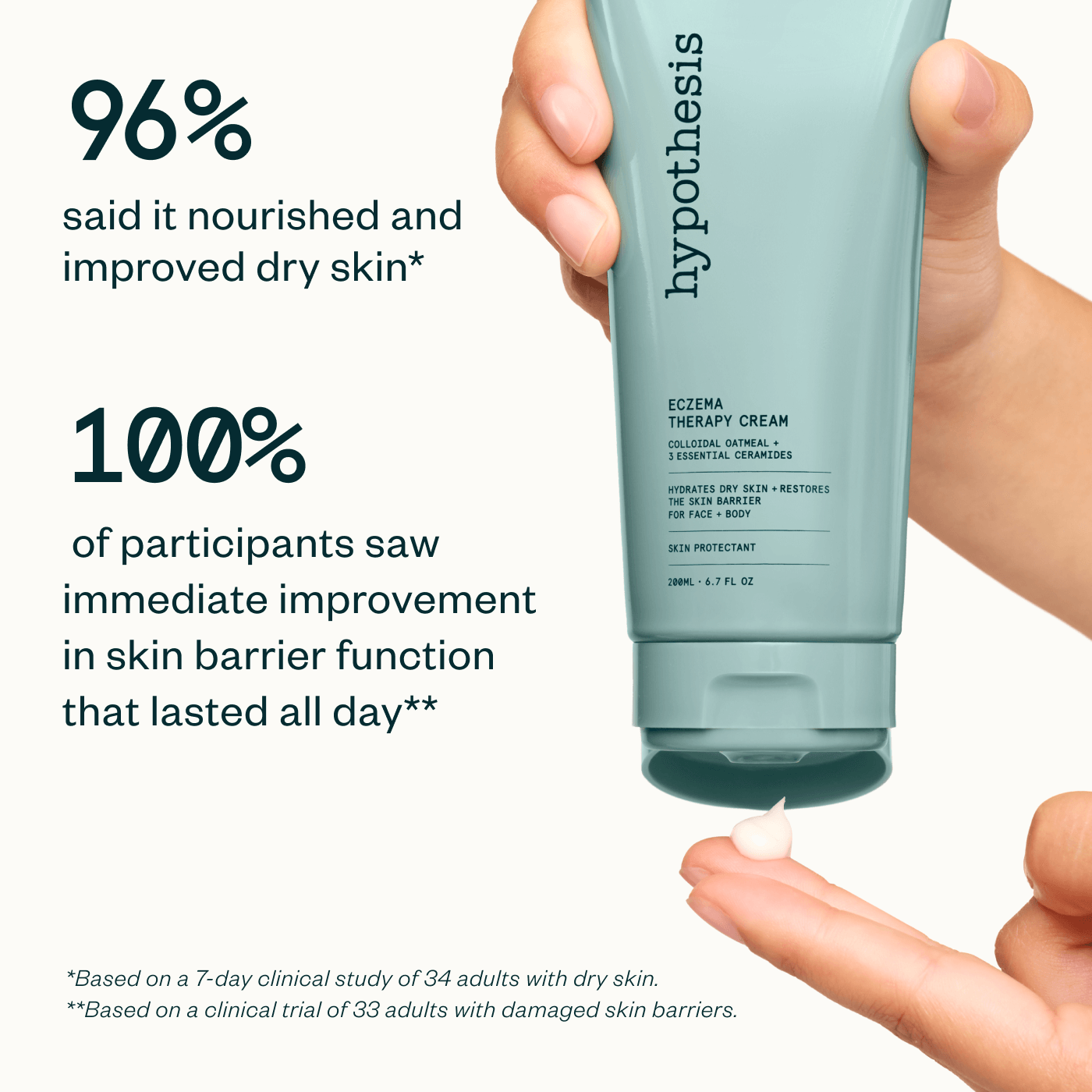
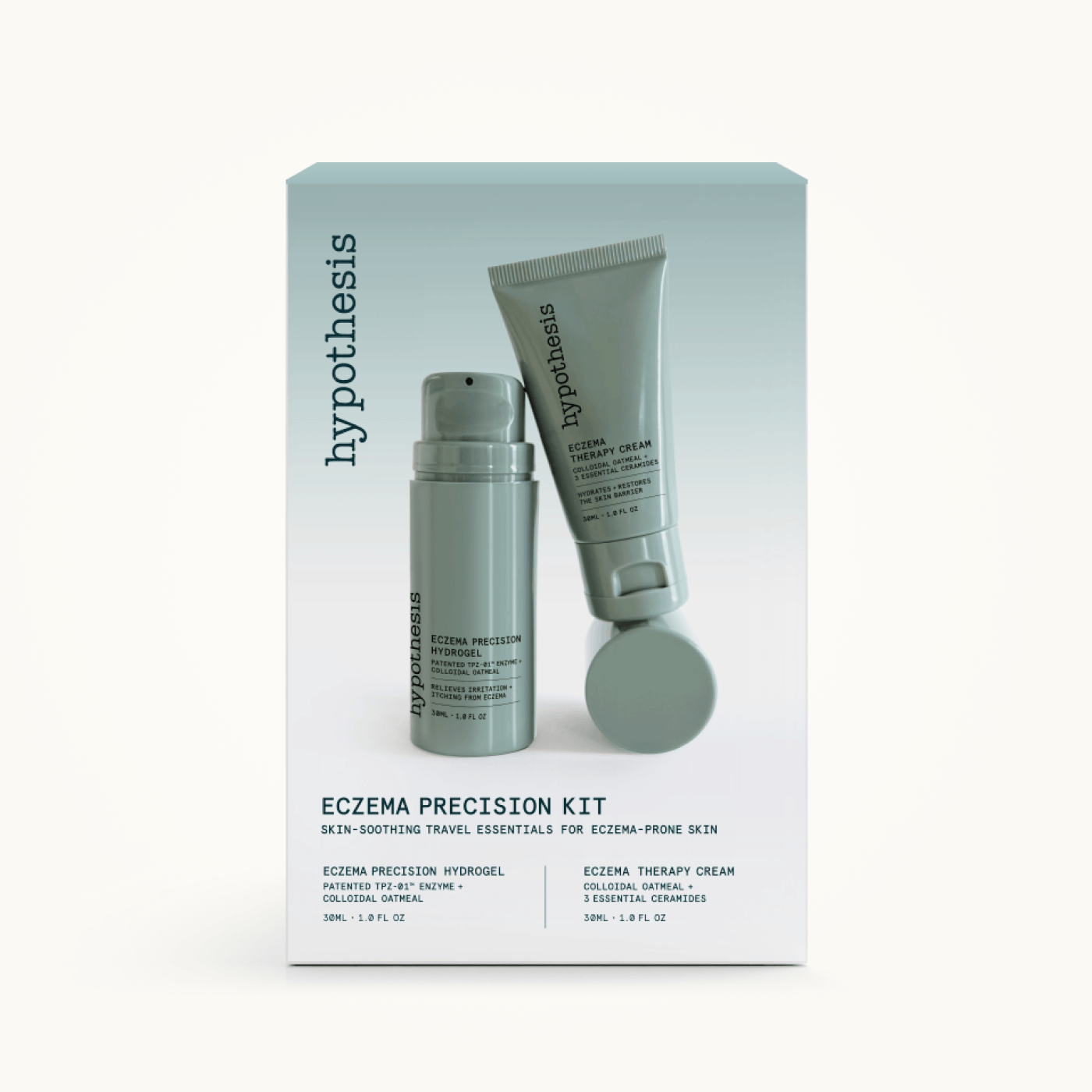
Made with soothing, moisture-replenishing ingredients like 1% colloidal oatmeal, ceramides, bisabolol and more, our quick-absorbing Eczema Therapy Cream is designed to support this step, repairing and strengthening the skin barrier before applying SPF.
How to Choose the Best Sunscreen for Eczema-Prone Skin
Choosing the right sunscreen is essential, especially for sensitive or reactive skin. Keep these guidelines in mind:
- Use broad-spectrum SPF 30 or higher
This protects against both UVA and UVB rays. - Consider mineral sunscreens
Many people with eczema find zinc oxide or titanium dioxide formulas easier to tolerate. - Avoid common irritants
Look for fragrance-free and alcohol-free formulations, and be cautious with unnecessary additives. - Choose water-resistant formulas when needed
If you are sweating or swimming, water-resistant sunscreen helps maintain protection. - Patch test new products
Test a small area for several days before full use.
Beyond Sunscreen: Sun Protection Tips for Eczema
Sunscreen works best as part of a broader strategy:
- Before SPF, apply a barrier-repairing moisturizer like Eczema Therapy Cream that can improve comfort and reduce irritation.
- Avoid peak sun hours (10am–2pm).
- Wear protective clothing and wide-brimmed hats.
- Use UV-blocking sunglasses.
- Rinse off sweat after outdoor activities.
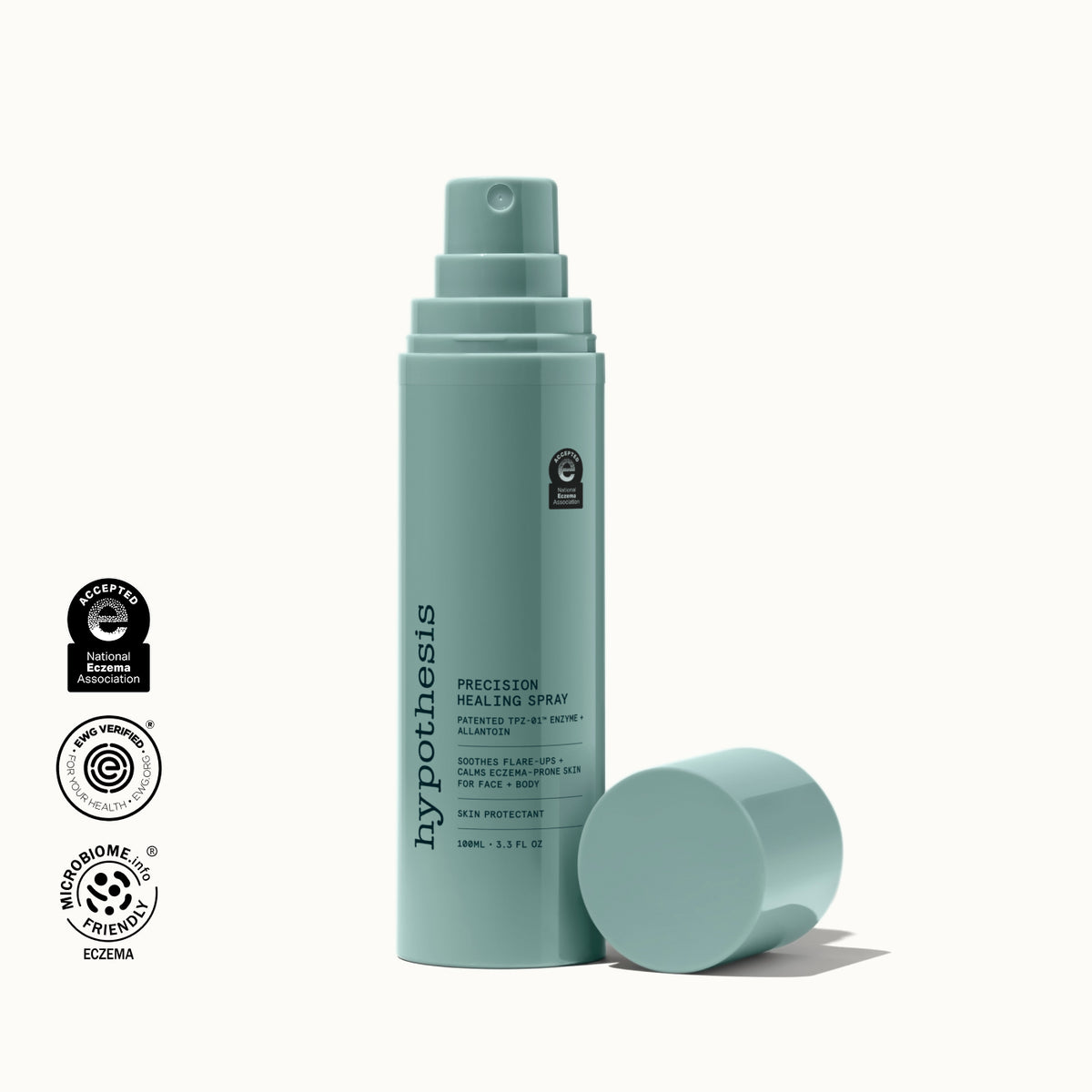
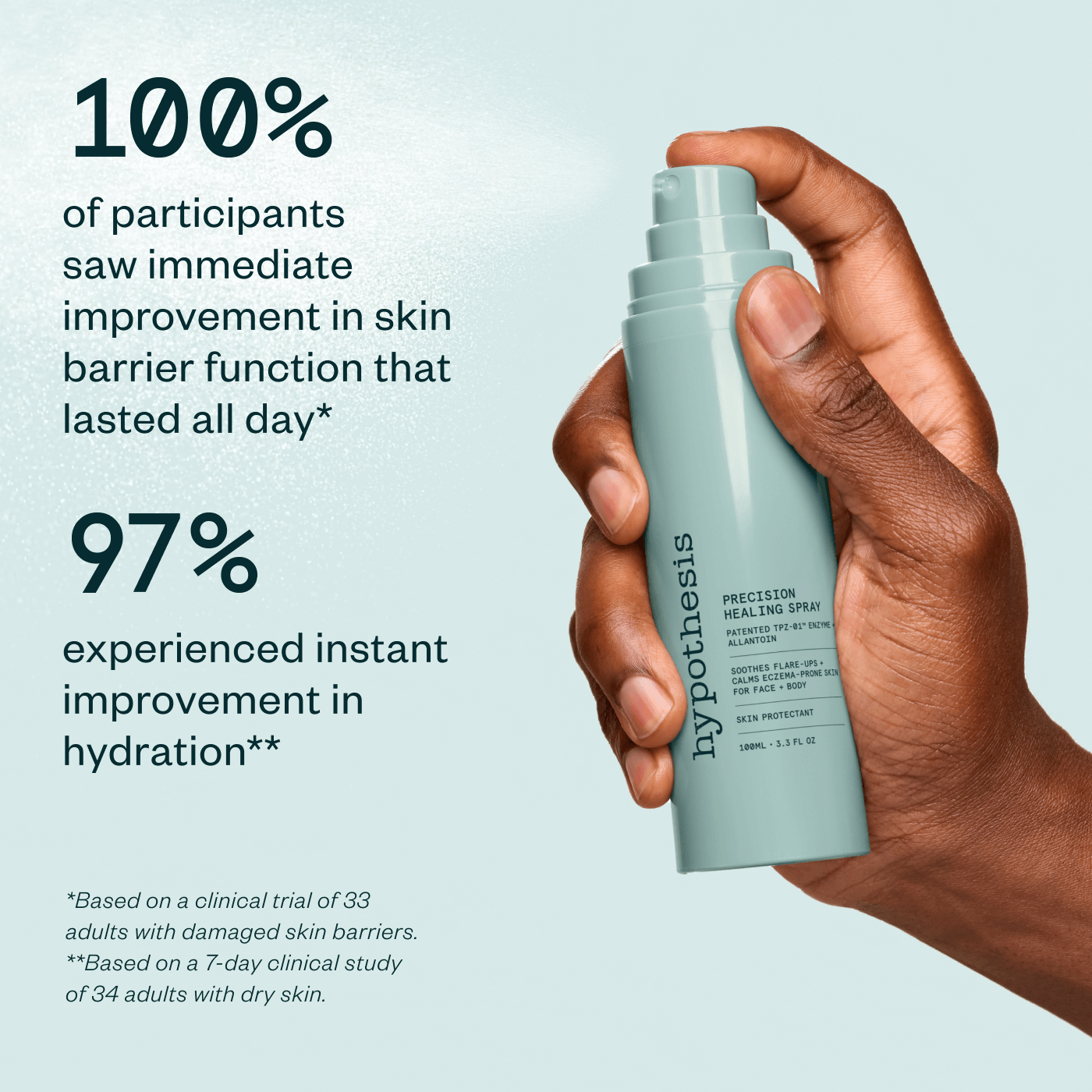
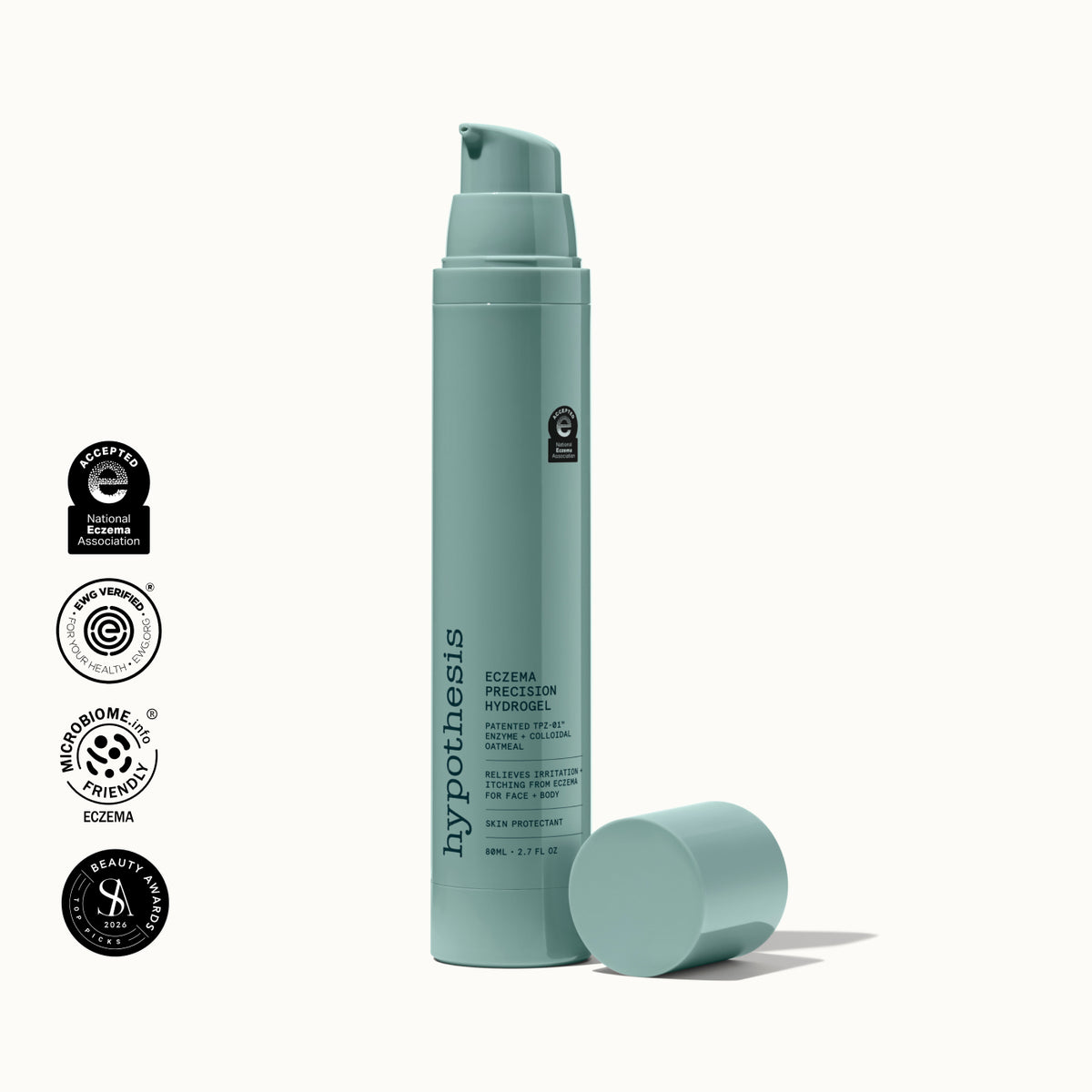
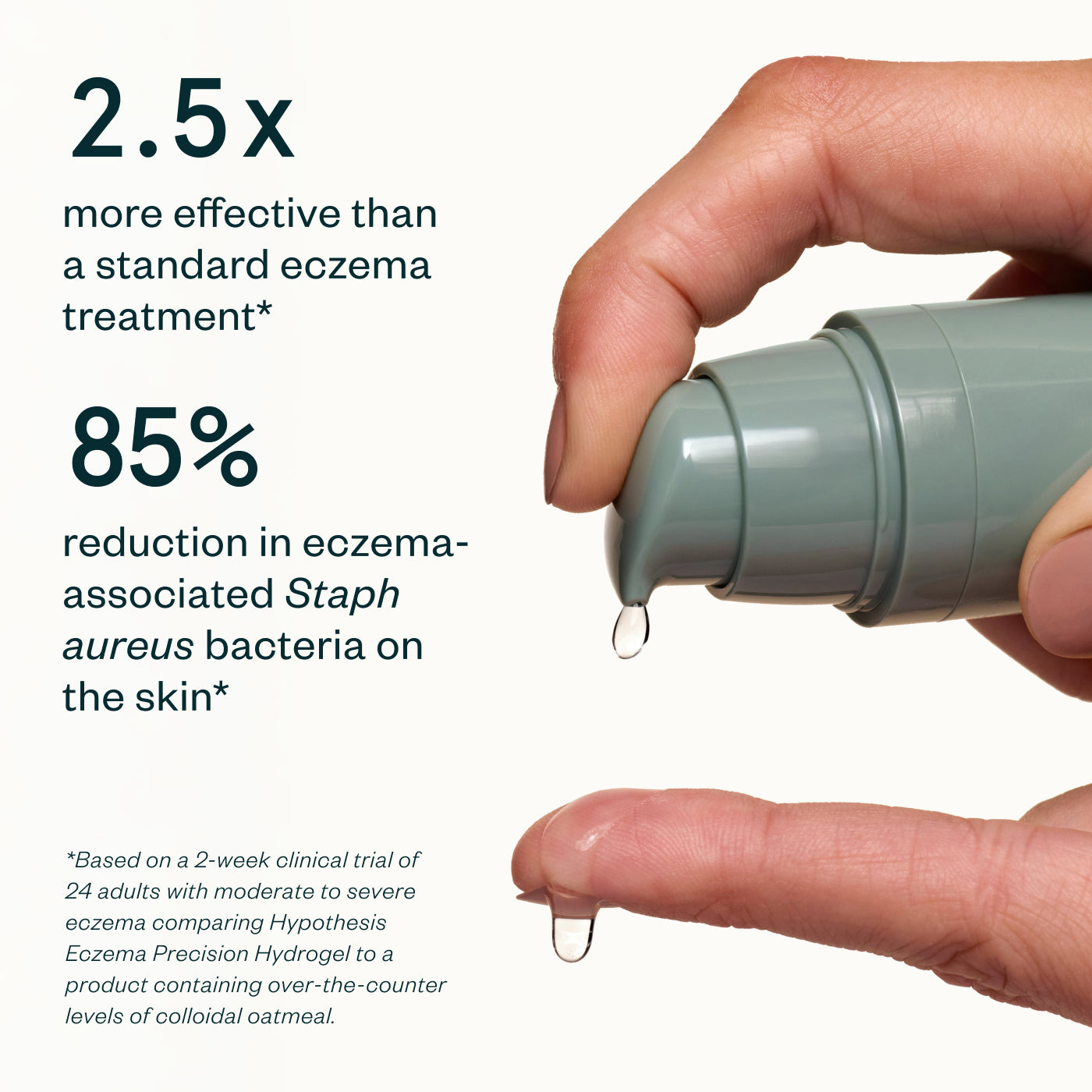
- After cleansing skin, apply Eczema Precision Hydrogel or Precision Healing Spray—both help to calm irritation and specifically target flare-up-causing Staph aureus bacteria thanks to our TPZ-01™ precision enzyme.
- Follow with a reapplication of Eczema Therapy Cream to soothe and replenish the skin’s protective barrier.
These habits can help reduce stress on eczema-prone skin.
Keep Your Routine Consistent
Consistency is one of the most important factors in managing eczema.
Maintaining a daily routine that supports the skin barrier helps keep skin in a stable, calm state, making it more resilient to environmental stressors like sun and heat. Our eczema care products support this daily balance as part of a consistent, long-term eczema care routine.
The Bottom Line: Can You Be in the Sun with Eczema?
Yes, with the right approach.
With strong barrier support, an eczema-friendly sunscreen, targeted bacterial control, and sun-smart habits, you can enjoy the seasons ahead while minimizing irritation and flare risk.