

Eczema Care
Our Story: Why We Built Hypothesis™ for the Eczema Community
We know many of you want to understand the science and story behind hypothesis™—how we started, what motivates us, and why we do what we do. At our core, we're on a mission to radically rethink how we treat eczema, thanks to a brand-new kind of precision eczema care that works with the skin’s microbiome, not against it.
Our founding team of scientists has spent decades studying the hidden worlds of microbial communities, both in the environment and on our skin. Our work in metagenomics has led to multiple patents across drug discovery, enzyme engineering, and biotechnology. And as research began to emerge around the role Staph aureus bacteria plays in eczema flare-ups, we knew we could make a difference for the eczema community.
We sat down with Maritza Miller, one of our four co-founders, to walk you through the research journey that led to our breakthrough patented enzyme TPZ-01™, the three-and-a-half years of development and rigorous testing it took to create our formulas, and why accessibility has been non-negotiable from day one.
What's the story behind hypothesis™? Why did you decide to create an eczema care brand?
Over the past 15 years, research has made one thing clear: imbalances in the skin microbiome play a central role in many skin conditions. In the case of eczema, the harmful bacteria Staph aureus is not only commonly found on eczema sufferers, it’s actually a main driver of eczema flare-ups. Yet traditional eczema care products like steroid creams and moisturizers haven’t kept up. Most formulas still rely on decades-old ingredients that either ignore the underlying microbiome imbalance or damage the entire microbiome, including the beneficial bacteria the skin needs.
This gap is where hypothesis™ was born.
We believed we could use our background in metagenomics and enzyme engineering to create something better—precision enzymes that selectively kill bad bacteria without harming healthy bacteria. And, just as importantly, we believed these solutions should be rigorously tested and validated, in the lab and in clinical studies, to ensure they deliver real, measurable benefits.


Our mission is simple: use cutting-edge science to create products that help people feel better in their skin.
What did you discover, and why was it such a game-changer?
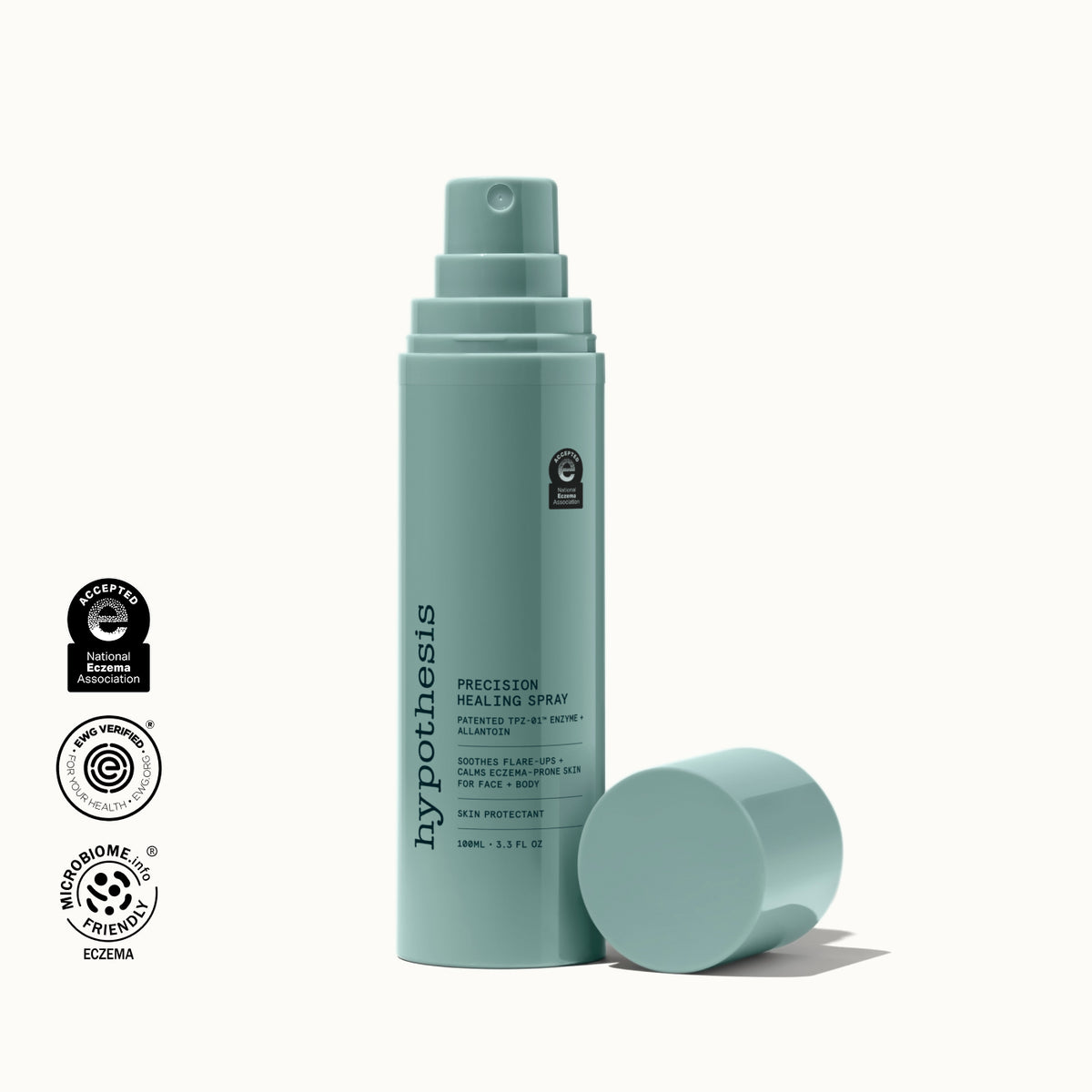
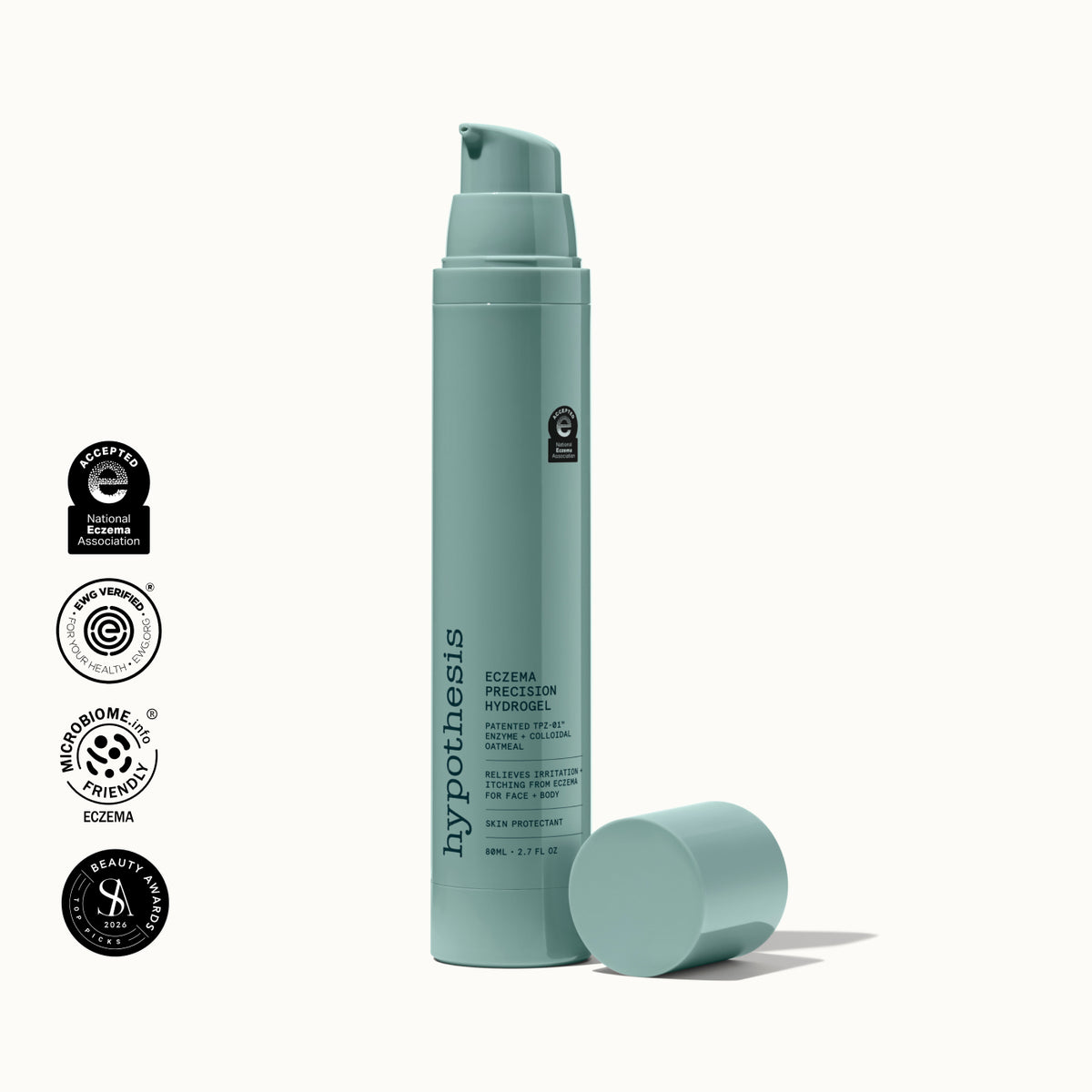
Our first innovation is our patented enzyme, TPZ-01™, a breakthrough ingredient designed to change the way we approach eczema care. What makes TPZ-01™ so unique is its precision: it targets and destroys only the harmful Staph aureus bacteria without disturbing the beneficial “good” bacteria that support a healthy skin microbiome.
Decades of research show just how disruptive Staph aureus can be when it takes over. It releases toxins, triggers itch, drives inflammation, and suppresses the growth of healthy microorganisms, all of which keeps your skin stuck in a cycle of flare-ups and a weakened barrier.
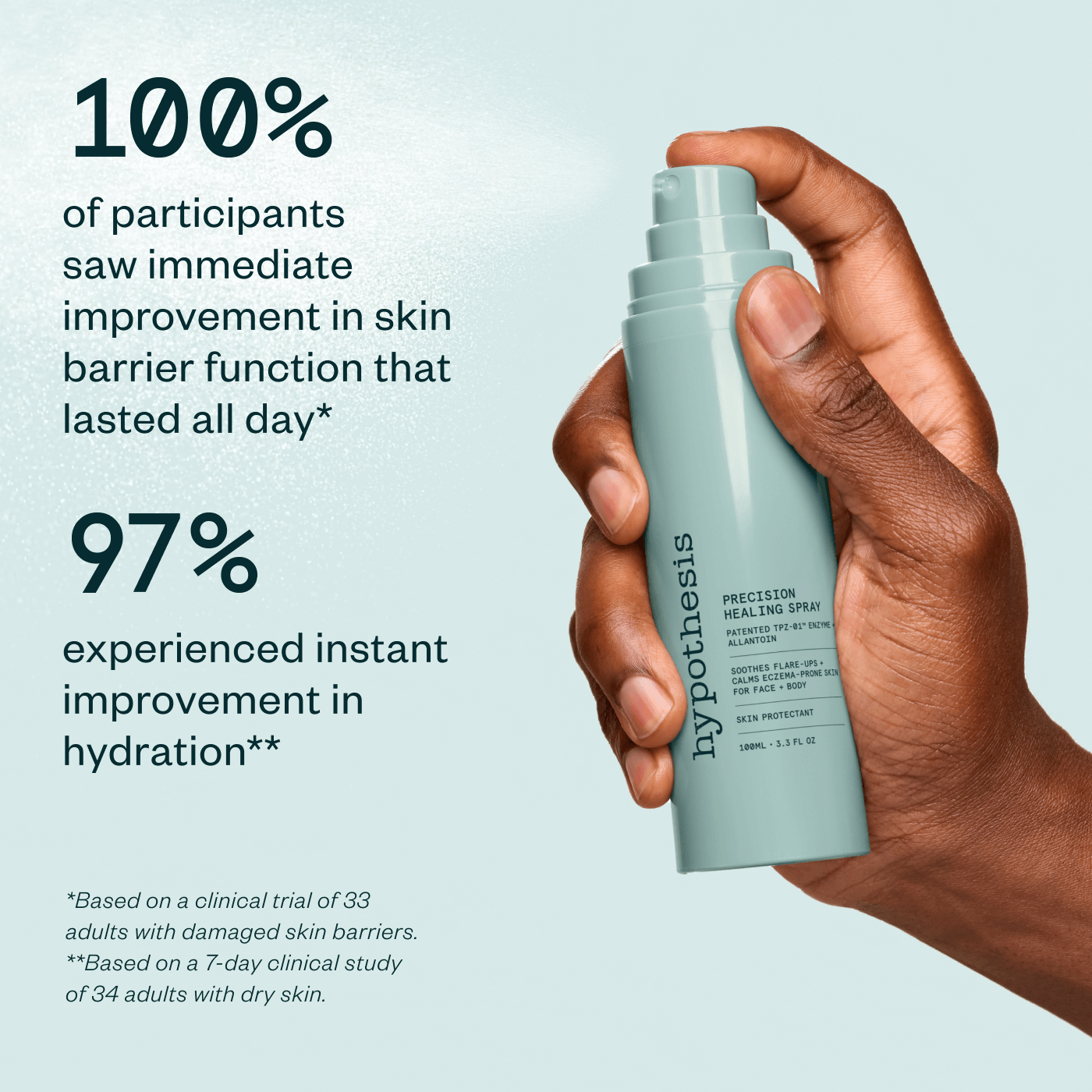
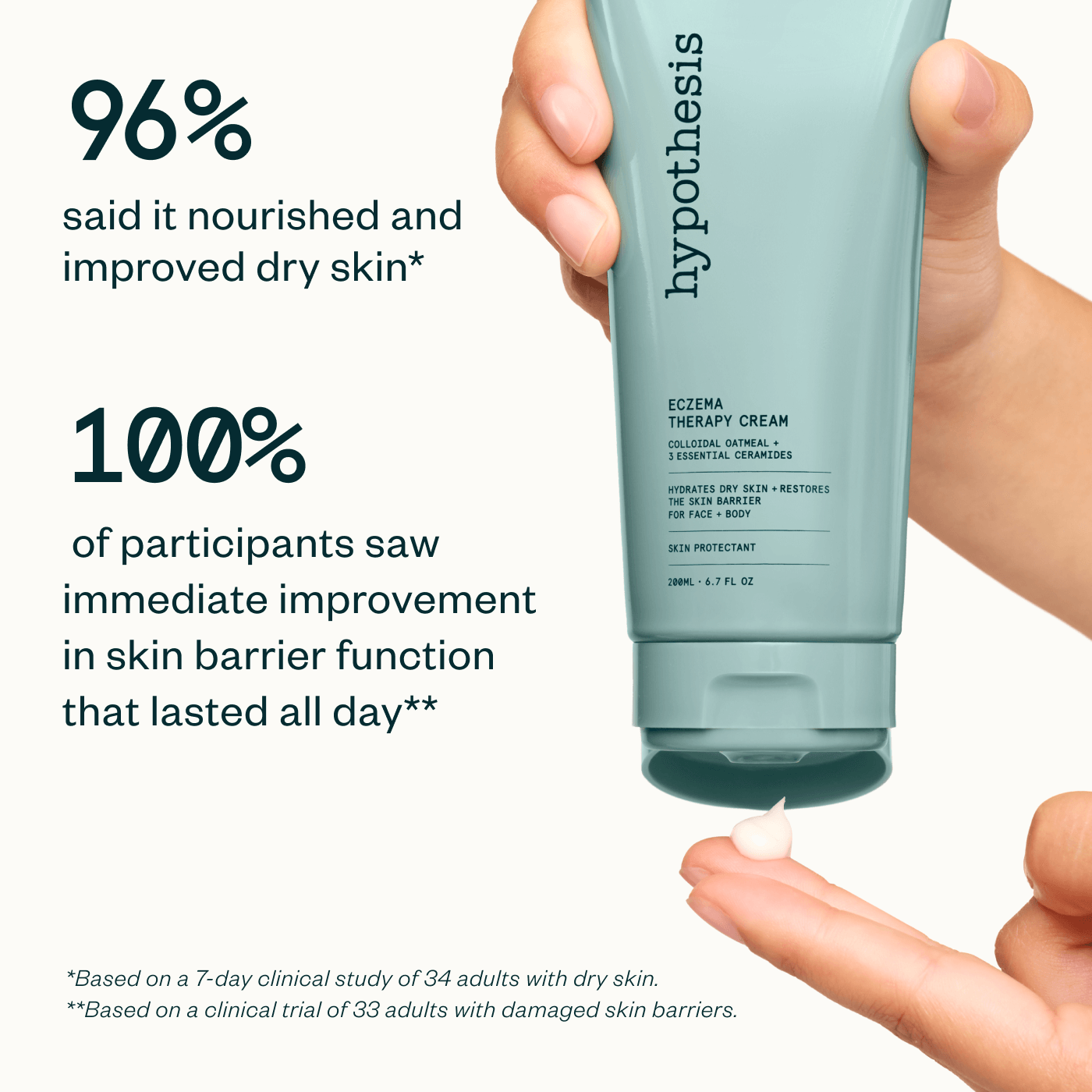
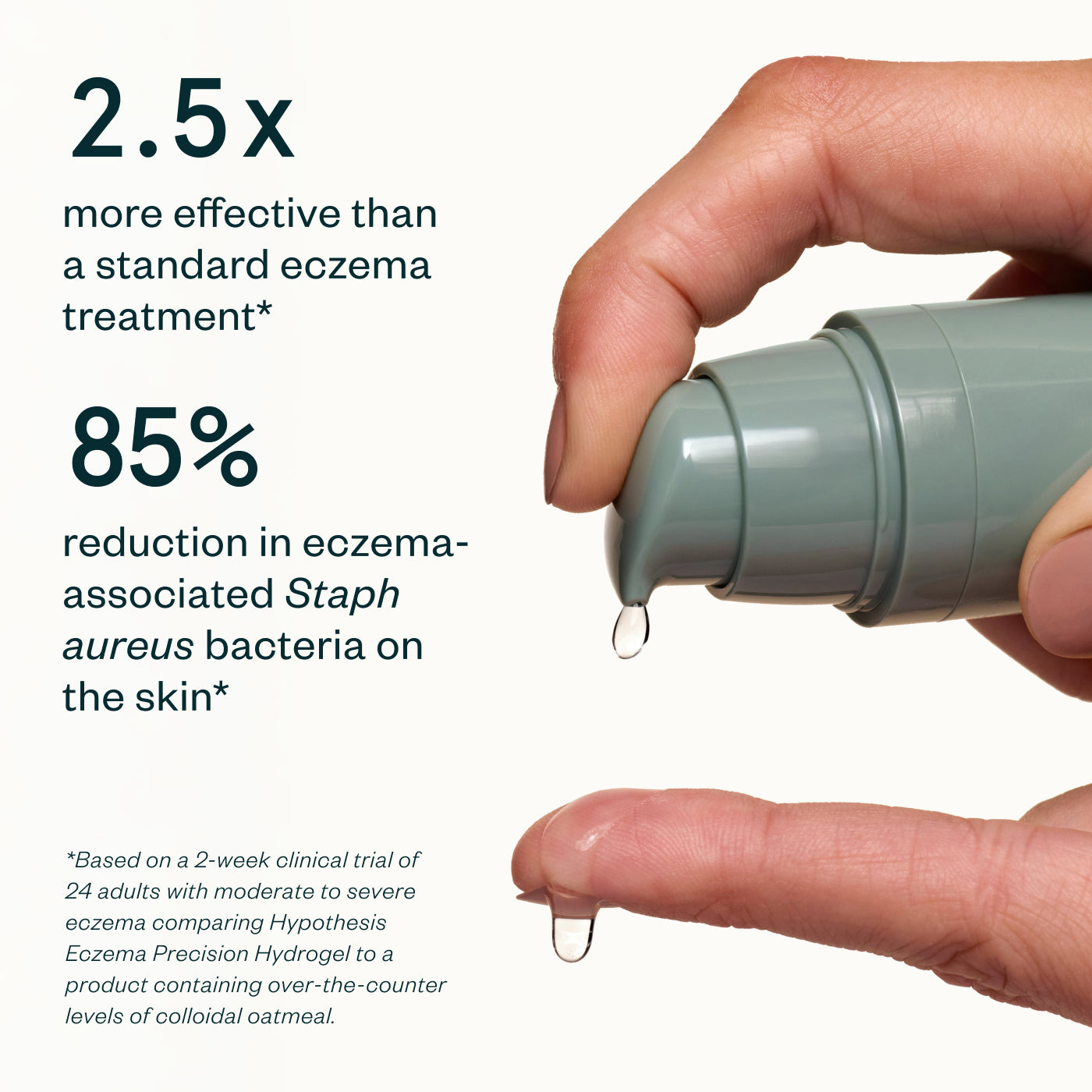
TPZ-01™ helps break that cycle. In a clinical study, hypothesis™ products reduced Staph aureus on skin by 85 percent while preserving the beneficial microorganisms. And in a clinical study comparing our TPZ-01™ products to traditional eczema treatments, ours were 2.5x more effective at reducing eczema symptoms.
Walk us through the research process—how long did it take to develop TPZ-01™ and the formulas?
Building hypothesis™ took a little over three and a half years. Finding the right enzyme meant sifting through enormous amounts of metagenomic data—not like finding a needle in a haystack, but more like sorting grains of sand by color, shape, and size! From that massive dataset, we selected hundreds of enzyme candidates to bring into the lab.
From there, the testing began. We evaluated each enzyme for its ability to kill Staph aureus and, equally important, whether it spared the beneficial bacteria. Any candidates that passed these first screens then underwent stress testing: pH tolerance, heat, cold, freeze-thaw cycles. We wanted not just a good enzyme, but a truly robust one.
In the end, only a handful made it through. Of course, having an incredible enzyme wasn’t enough. Enzymes can be tricky to formulate and we needed real products—ones that could sit on shelves, stay stable, and feel great on the skin. That started a whole new chapter of experimentation with gelling agents, buffers, packaging formats, and more. It was a grueling process (I lost count of how many weekends I spent in the lab), but seeing the formulas achieve a two-year shelf life and strong clinical results made every hour worth it.
Beyond the years of research, how do you prove to the eczema community that hypothesis™ works?
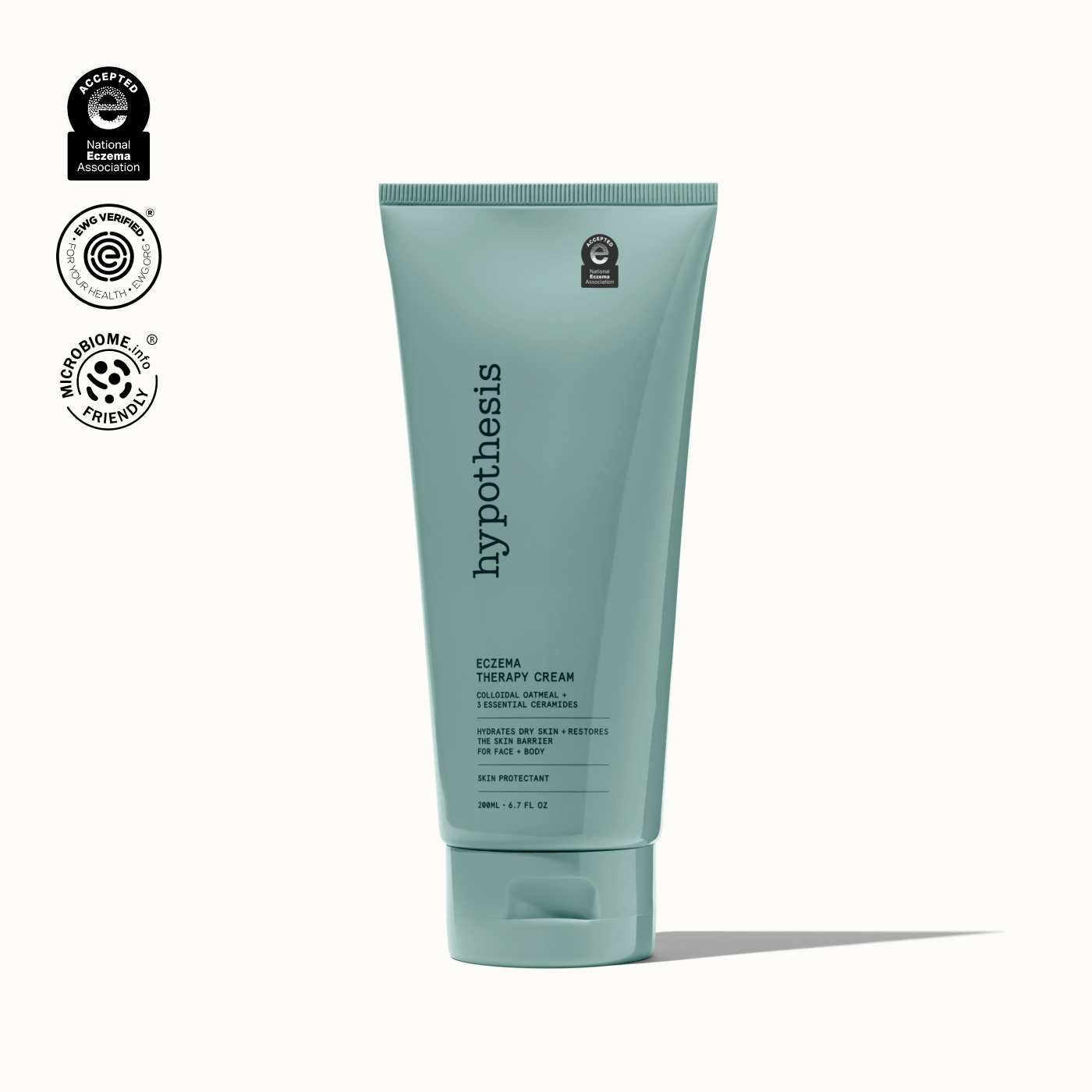
Clinical validation is core to who we are: we’ve done rigorous clinical testing of all our products to prove that they’re effective at reducing eczema symptoms. We’re also proud to share that our products are the first products to ever have been awarded MyMicrobiome’s Microbiome Friendly for Eczema certification. MyMicrobiome created this certification to recognize the critical role Staph aureus plays in eczema. To qualify for this seal, a product must selectively kill Staph aureus while still protecting the good bacteria in MyMicrobiome’s rigorous third-party laboratory testing. Hypothesis™ products are the only products to ever meet this stringent criteria, so receiving this seal is just incredible third-party validation that our product works the way we say it does.
We’re also very proud to have earned the NEA Seal of Acceptance. The National Eczema Association does so much for the eczema community, and having their seal feels like a true badge of honor. It signals that our formulas meet strict safety standards and are suitable for sensitive, eczema-prone skin, something that has always been at the heart of our mission.
We’re equally grateful that our products are EWG Verified® for eczema by the Environmental Working Group (EWG)—in fact, we’re one of the first eczema care brands to receive this certification. This seal makes it easy for customers to see that we prioritize safe, high-quality, research-backed ingredients. With so much evolving science in skincare, we wanted to ensure that people could quickly identify that our products were held to the highest possible standards.
What makes you most proud about hypothesis™?
Personally, I’ve always wanted to be a scientist. In kindergarten it was paleontology, later botany, but the end goal never changed. I was drawn to discovery, to research and development, and to the idea that science could genuinely improve people’s lives.
I’m proud that our products don’t just work from a scientific standpoint, they work in the real world. Developing the TPZ-01™ enzyme could have led to an incredibly expensive formula, but as a company we’ve been clear from day one: we will never create products that aren’t accessible. Skin health should never be a luxury reserved for a few. And what matters most to our founding team is that our research actually helps people see real improvements in their skin.
What's next for hypothesis™?
We’re thrilled to have just launched at Ulta and to continue bringing awareness of hypothesis™ to wider audience. Our goal has always been to connect with as many people as possible who are living with eczema and sensitive skin. Knowing that up to 90% of eczema sufferers have Staph aureus on their skin means our technology has the potential to help the vast majority of the community, approximately 28 million people in the United States alone.
We’re also incredibly excited about what’s coming next. Our team has developed another precision enzyme with a completely different focus—we’re deep in development now and hope to share these new formulas with you this summer.